




Executive Summary
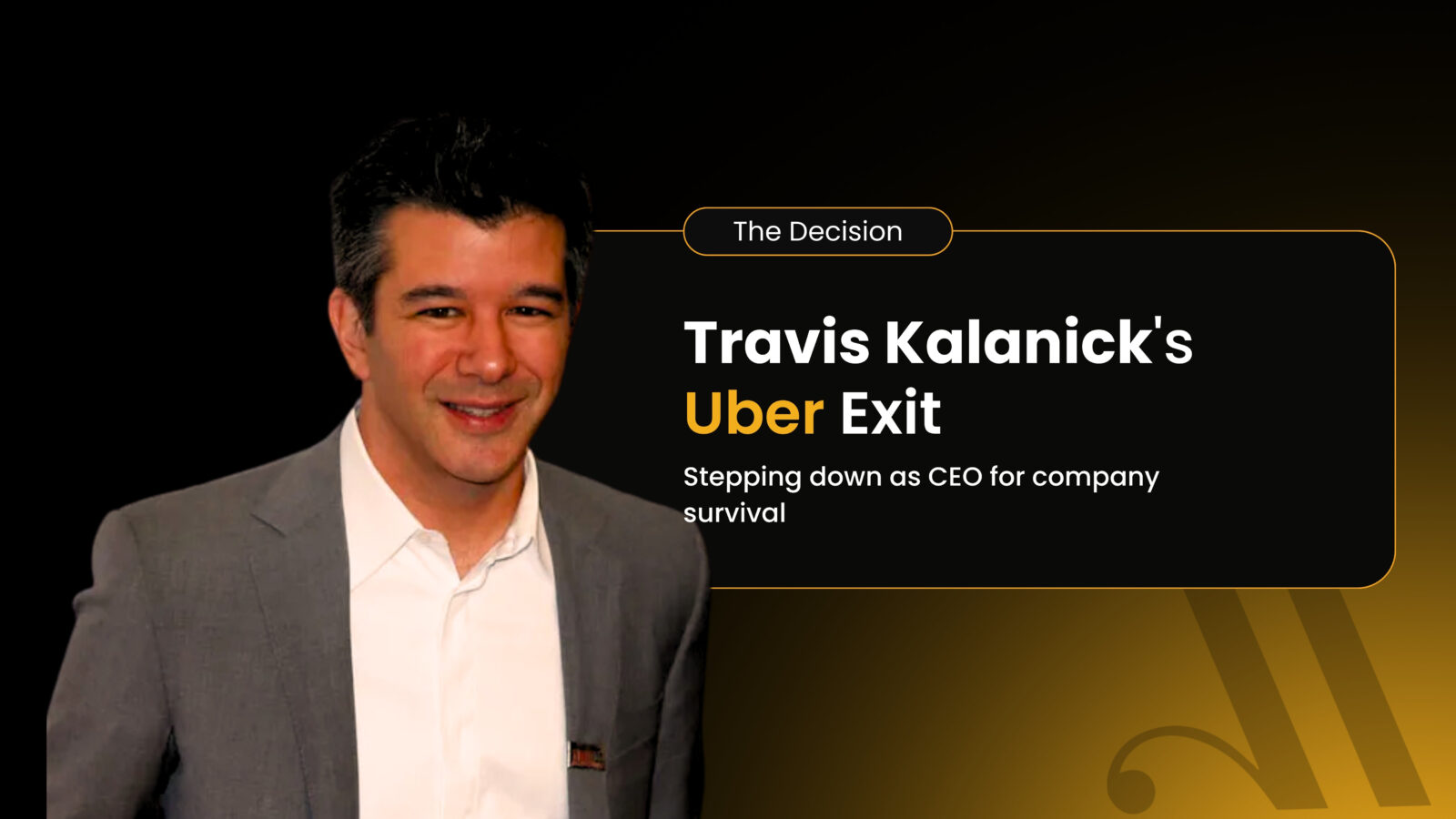
On June 21, 2017, Uber co-founder and CEO Travis Kalanick voluntarily resigned from his leadership position following mounting investor pressure and organizational crises that threatened the company’s survival and IPO prospects. This case study examines how founder self-sacrifice during peak organizational turmoil can preserve enterprise value and enable long-term competitive positioning despite personal leadership attachment and ego investment.
“Sometimes letting go is the strongest act of leadership.” — Anonymous

Market Context and Financial Impact Assessment
Pre-Crisis Market Position
- Uber valued at $68 billion in private market funding rounds
- Global expansion across 600+ cities in 65+ countries
- Market leadership in ride-sharing with 75%+ market share in key cities
- Preparation for anticipated $100+ billion IPO launch
Crisis Metrics and Organizational Deterioration
- Legal Exposure: Federal investigation into Greyball software and regulatory evasion
- Cultural Scandals: Sexual harassment allegations and toxic workplace investigations
- Competitive Pressure: Lyft market share growth and driver/rider defection
- Investor Confidence: Major shareholders demanding leadership changes for funding continuation
- Valuation Risk: Estimated 30-40% enterprise value decline without leadership resolution
Strategic Decision Framework Analysis
Critical Assessment Parameters
Kalanick’s strategic evaluation identified three fundamental organizational realities:
- Founder-Market Fit Crisis: Personal leadership style incompatible with scale and regulatory requirements
- Investor Relationship Breakdown: Board confidence eroded beyond operational recovery potential
- Cultural Transformation Necessity: Organizational culture requiring leadership change for sustainable operation

Strategic Options Evaluation Matrix
| Option | Approach | Personal Control | Enterprise Value Impact |
| Defensive Resistance | Fight investor pressure, maintain CEO position | Maximum control retention | Potential company destruction, IPO cancellation |
| Negotiated Transition | Gradual power transfer, advisory role retention | Moderate influence preservation | Delayed value recovery, continued uncertainty |
| Immediate Resignation | Complete CEO departure, board governance | Personal control sacrifice | Maximum value preservation, rapid stabilization |
| Dual Leadership | Shared CEO structure, operational delegation | Partial control maintenance | Stakeholder confusion, execution complexity |
Implementation Strategy and Resource Allocation
Four-Pillar Leadership Transition Framework
1. Voluntary Leadership Succession and Governance Transfer
- Decision Timeline: Immediate resignation following investor ultimatum
- Transition Strategy: Complete operational control transfer to interim leadership
- Board Restructuring: Independent director appointments and governance reform
2. Organizational Culture Reformation Initiative
- Leadership Philosophy: External CEO recruitment for cultural transformation
- Policy Overhaul: Comprehensive workplace culture and ethics program implementation
- Management Changes: Executive team restructuring and diversity initiatives
3. Investor Relationship Restoration and Confidence Rebuilding
- Stakeholder Engagement: Direct investor communication and commitment demonstration
- Governance Improvements: Enhanced board oversight and accountability mechanisms
- Financial Transparency: Improved reporting and operational metrics disclosure
4. Competitive Position Stabilization and Market Recovery
- Strategic Focus: Core ride-sharing business prioritization over expansion experiments
- Regulatory Compliance: Proactive engagement with transportation authorities globally
- Brand Rehabilitation: Public relations campaign and corporate responsibility initiatives
Enhanced Succession and Value Preservation Architecture
Leadership Transition Structure Components
- CEO Search Process: Professional executive search for external leadership talent
- Interim Management: COO and executive team operational continuity during transition
- Founder Role Evolution: Board position retention with operational independence
- Equity Preservation: Maintaining significant ownership stake despite governance exit
Organizational Stabilization Program Framework
Cultural Assessment: External consulting evaluation of workplace environment and practices
Executive Recruitment: C-suite talent acquisition focused on operational excellence and compliance
Process Redesign: Corporate governance, legal compliance, and ethical decision-making systems
Stakeholder Communication: Comprehensive engagement strategy for employees, drivers, riders, and investors

“Leadership is not about holding power, it’s about knowing when to let it go.” — Anonymous








Leave a comment