




David Rubenstein: Redefining Private Equity with Strategic Philanthropy
When David Rubenstein paid $21.3 million for the last privately owned copy of the Magna Carta in 2007, critics questioned the business logic behind such extravagant historical collecting. Two decades later, his “patriotic philanthropy” has fundamentally transformed how private equity leaders approach stakeholder capitalism, proving that cultural stewardship creates competitive advantages while generating superior returns.
At 75, Rubenstein has built The Carlyle Group into one of the world’s largest private equity firms with $465 billion of assets under management, while simultaneously establishing himself as America’s most strategic philanthropist. His recent $1.7 billion acquisition of the Baltimore Orioles in 2024 demonstrates how principled leadership creates value across multiple asset classes.
Strategic Signature: Patriotic Philanthropy as Competitive Differentiation
Rubenstein’s defining strategic breakthrough came when he recognized that preserving American historical artifacts and landmarks could generate business value while fulfilling civic responsibility. His approach to “patriotic philanthropy” represents systematic investment in national heritage that enhances Carlyle’s reputation while creating unique networking and relationship-building opportunities.
Rubenstein purchased the last privately owned copy of Magna Carta at Sotheby’s auction house for $21.3 million, then donated it to the National Archives. This methodology challenged traditional assumptions about philanthropic strategy by demonstrating that historical preservation creates strategic positioning advantages for institutional asset managers.
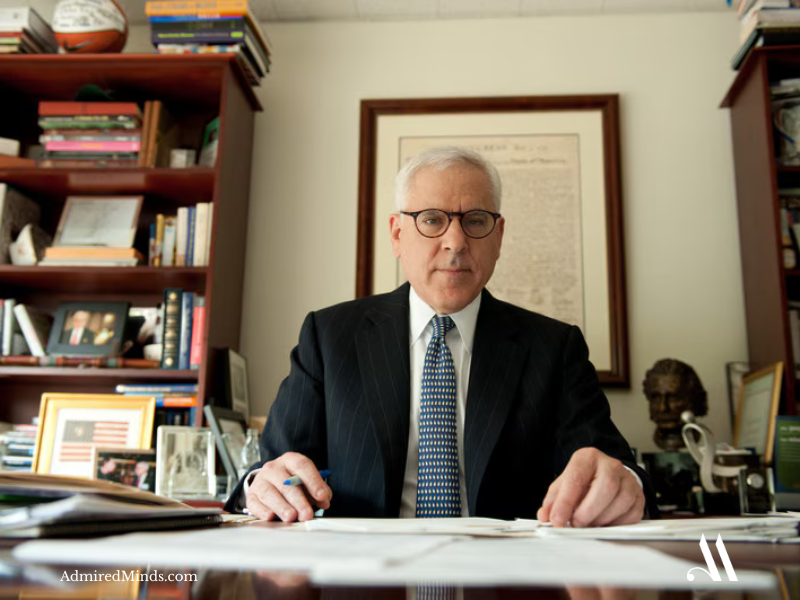
The genius lay in recognizing that “patriotic philanthropy reminds people of the history and heritage of our country”, positioning Carlyle as a steward of American values rather than merely a profit-seeking investment firm.
The Responsible Capital Philosophy
Rubenstein’s most revolutionary principle involves treating private equity as a platform for positive social impact rather than pure financial engineering. His strategic framework operates through integrated approaches that prioritize long-term value creation over short-term extraction.
This philosophy drives fundamental business practices, including:
- Historical preservation as a relationship building strategy: Funding restorations of the Lincoln Memorial and Washington Monument creates access to political and business leaders while demonstrating authentic commitment to national stewardship.
- ESG integration as a competitive necessity: ESG plays a significant role in whether institutions will allocate money to private markets, requiring systematic environmental and social considerations in every investment decision.
- Cultural leadership through educational initiatives: Rather than avoiding public scrutiny, Rubenstein positions private equity as an essential component of American economic success through media appearances and thought leadership.
Leadership Philosophy: Service Over Self-Interest
Rubenstein’s worldview centers on the belief that “you are on the face of the earth for a relatively short period ‚Äì a nanosecond ‚Äì in the several million year span of humankind. Do not waste that precious time. Do not shrink from the responsibility of trying to make a difference.”
His strategic approach recognizes fundamental principles that challenge private equity orthodoxy:
- Long-term reputation building over quarterly performance: Systematic investment in national heritage creates enduring relationships and credibility that transcend individual deal cycles.
- Transparency as competitive advantage: Rather than avoiding public attention, Rubenstein embraces media visibility and educational opportunities that position Carlyle as a thought leader rather than a financial operator.
- Stakeholder value creation through cultural stewardship: “Doing things to remind people of the history and heritage of our country” generates goodwill that facilitates deal-making and capital raising across political and business networks.
Business Impact: Transforming Private Equity’s Public Image
Rubenstein’s influence extends far beyond Carlyle’s impressive financial metrics to systematic transformation of how private equity firms approach public engagement and stakeholder relations. His “patriotic philanthropy” supports the preservation of buildings and objects central to American history, creating positive associations for an industry often criticized for aggressive tactics.
His strategic positioning demonstrates measurable business outcomes. Following Carlyle’s 2012 IPO, the firm raised $671 million while maintaining founding partners as largest shareholders, proving that responsible leadership attracts rather than repels institutional capital.
The approach generates ecosystem effects that benefit the entire private equity industry by demonstrating positive social impact capabilities that regulatory critics cannot easily dismiss.
Strategic Innovation: The Cultural Capital Framework
Rubenstein’s most sophisticated innovation involves systematically building “cultural capital” that creates business advantages through authentic civic engagement. His $10 million donation to the White House Historical Association in 2010 upgraded Decatur House on Lafayette Square, establishing permanent relationships with political leadership across party lines.
This framework creates multiple competitive advantages:
- Bipartisan relationship building through historical stewardship: Supporting national heritage projects transcends political divisions while creating access to decision-makers across government and business.
- Media platform development for thought leadership: Regular appearances on educational television and speaking engagements position Rubenstein as an authoritative voice on economic policy and business strategy.
- Next-generation talent attraction through purpose alignment: Demonstrating authentic commitment to national service appeals to younger investment professionals who increasingly prioritize purpose alongside compensation.

Crisis Leadership and Global Vision
Maintaining Principled Approaches During Market Stress
Rubenstein’s response to financial crises reveals strategic thinking that maintains stakeholder trust during periods when private equity faces public scrutiny. Rather than defensive positioning, he accelerates philanthropic commitments that demonstrate authentic values rather than opportunistic public relations.
His pattern of philanthropic investment since 2007, including $4.5 million to the National Zoo’s giant panda reproduction program in 2011, demonstrates consistency that builds credibility during volatile periods when other firms reduce community engagement. His crisis management philosophy emphasizes proactive relationship building that creates goodwill reserves before they become necessary for business continuity.
Exporting Responsible Capital Worldwide
Rubenstein’s strategic approach extends beyond American markets toward systematic transformation of private equity practices globally. His model demonstrates that cultural stewardship and historical preservation create business value that transcends national boundaries.
His international expansion strategy recognizes that institutional investors worldwide increasingly evaluate private equity firms based on ESG capabilities and stakeholder engagement rather than purely financial metrics.
The Rubenstein Strategic Legacy
David Rubenstein proved that private equity leadership requires authentic commitment to societal value creation alongside financial returns. His systematic demonstration that patriotic philanthropy generates business advantages fundamentally changed how institutional investors approach asset manager selection.
Most significantly, he showed that sustainable competitive advantage in private equity requires cultural credibility and stakeholder trust that cannot be manufactured through marketing campaigns but must be earned through consistent civic engagement over decades.
In an era where private equity increasingly faces regulatory scrutiny and public criticism, Rubenstein’s model proves that proactive civic engagement represents strategic asset protection rather than charitable cost, creating sustainable competitive advantages for firms committed to authentic stakeholder capitalism.
Discover how to integrate purpose into your investment strategy. Learn more about responsible capital management and long-term value creation.
Explore Responsible Investment Principles Today.
***
‚ÄúMoney can buy you houses and cars, but it doesn’t buy you great friends or great memories. I think the ultimate purpose of life is to try and make a difference.‚Äù
— David Rubenstein









Leave a comment