




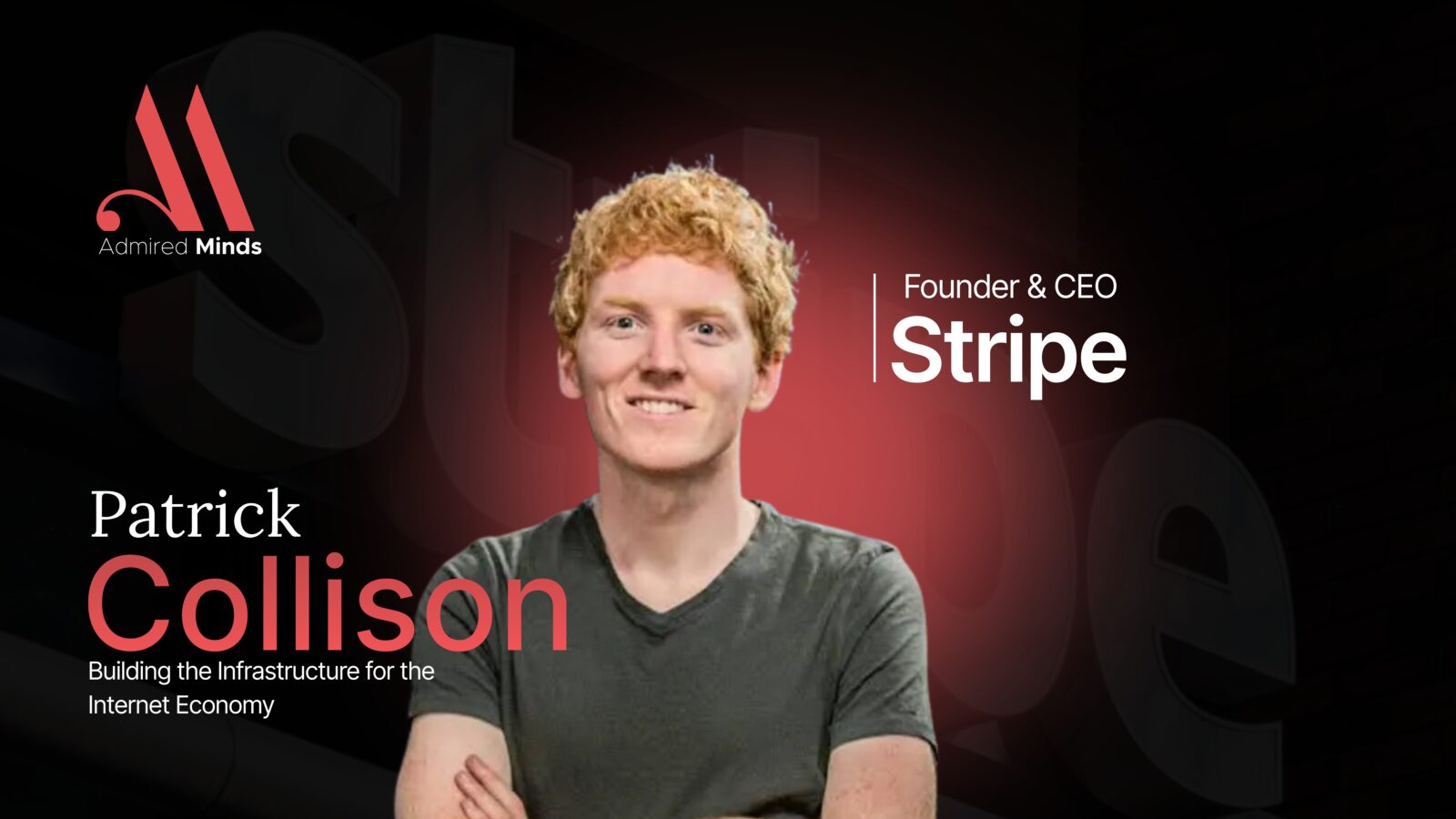
The Infrastructure Visionary Rebuilding Global Finance

In 2010, when Patrick Collison told investors he wanted to build “economic infrastructure for the internet,” most dismissed it as ambitious rhetoric from a 22-year-old college dropout. Existing payment systems seemed adequate, credit cards worked, PayPal existed, and banks had processed transactions for decades. But Collison saw a fundamental flaw in this logic: the internet had created entirely new economic models that legacy financial infrastructure couldn’t support.
His contrarian bet proved transformative. Stripe now processes over $1.4 trillion in payment volume annually and has achieved a $91.5 billion valuation as of February 2025, making it the largest privately-owned fintech company globally. More importantly, Collison built what he calls “invisible infrastructure”‚Äîfinancial systems so seamless that millions of businesses can operate without thinking about the complexity underneath.
At 36, Collison has demonstrated what he terms “infrastructure thinking,” building foundational systems that enable entire industries rather than solving individual company problems. His recent innovations, including the first general-purpose Payments Foundation Model trained on tens of billions of transactions and stablecoin capabilities across 151 countries, position him as a strategic leader who understands how to build scalable systems that reshape global commerce.
From Irish Prodigy to Infrastructure Pioneer: The Foundation of Systems Thinking
Collison’s approach to building global financial infrastructure draws from early experiences that shaped his understanding of systems complexity and elegant solutions. Winning the Young Scientist and Technology Exhibition at age sixteen revealed his ability to identify fundamental problems and create practical solutions at scale.
His background differs markedly from traditional fintech leaders. Rather than coming from finance or banking, Collison approached payments as an outsider with fresh perspective on infrastructure challenges. As he wasn’t a finance guy and didn’t grow up studying banking, he was an outsider and this perspective proved crucial for reimagining financial systems.
“Despite the competition, the existing solutions just weren’t good enough.”
The insight that led to Stripe emerged from recognizing systematic friction that constrained internet commerce growth and innovation.
His strategic framework from the beginning focused on what he calls “developer-first infrastructure,” building tools that enable other builders rather than competing for end-user attention. This approach required sophisticated understanding of how technology adoption happens: through technical decision-makers who prioritize reliability, simplicity, and integration ease over marketing claims.
The seven-line code integration that became Stripe’s signature wasn’t just about simplicity‚Äîit represented fundamental philosophy about infrastructure design. By making complex financial operations invisible to developers, Stripe enabled millions of businesses to accept payments without building internal financial expertise.

Building Invisible Infrastructure: The Strategic Architecture of Global Financial Systems
Collison’s approach to global financial infrastructure demonstrates sophisticated thinking about building systems that can operate seamlessly across different regulatory environments, currencies, and business models. His methodology centers on what he describes as “abstraction layer thinking,” hiding complexity while maintaining functionality.
The strategic evolution from simple payment processing to comprehensive financial infrastructure reveals long-term systems thinking. Today, Stripe offers billing tools, tax automation, fraud protection, identity verification, and even carbon removal tools—basically a fintech Swiss Army knife used by everyone from Ford and Amazon to Shopify and Spotify.
His framework for infrastructure development involves three strategic layers: core reliability (ensuring payments always work), elegant interfaces (making complex operations simple), and ecosystem enablement (allowing others to build on Stripe’s capabilities). This approach created platform effects where Stripe’s success directly enables customer success.
The recent launch of stablecoin Financial Accounts allowing businesses in 101 more countries to store stablecoin balances and use regular fiat money movement rails demonstrates sophisticated thinking about bridging traditional and emerging financial systems. Rather than viewing cryptocurrencies as replacement technology, Collison positioned Stripe to integrate both systems seamlessly.
“The magic happens when brilliant people focus on hard problems with clear objectives.”
His approach to artificial intelligence in financial services reflects infrastructure thinking applied to emerging technologies. The Payments Foundation Model trained on tens of billions of transactions doesn’t just improve fraud detection‚Äîit creates systematic advantages that compound over time as transaction volumes increase.
Systems Leadership: Building Organizations That Scale With Infrastructure Complexity
Collison’s leadership philosophy centers on what he calls “first principles engineering culture,” making decisions based on fundamental technical and business logic rather than industry conventions or competitive pressure. This approach proved essential for building systems that handle trillions of dollars while maintaining reliability and security.
His hiring strategy reflects sophisticated understanding of infrastructure challenges. Rather than prioritizing domain expertise in payments, Collison recruited engineers who understood large-scale systems problems across different industries. This approach enabled Stripe to apply insights from internet infrastructure to financial systems.
The organizational structure he built mirrors the infrastructure philosophy: autonomous teams with clear interfaces, systematic decision-making processes, and culture that prioritizes long-term reliability over short-term feature velocity.
“Focus on building capabilities that enable others to succeed rather than just solving your immediate problems.”
His approach to partnership strategy demonstrates infrastructure thinking applied to business development. Rather than viewing other companies as customers or competitors, Stripe built ecosystem relationships where partners’ success directly enhances Stripe’s platform value. This created sustainable competitive advantages through network effects.

The investment in research and development extends beyond immediate product needs to fundamental technology advancement. In 2021, he co-founded Arc Institute, a nonprofit research organization, demonstrating commitment to advancing scientific infrastructure alongside business infrastructure.
Beyond Payments: Strategic Vision for Economic Infrastructure of the Future
Collison’s current strategic focus involves positioning Stripe as comprehensive infrastructure for global digital commerce rather than simply a payments company. His vision centers on what he describes as “economic infrastructure”‚Äîsystems that enable new forms of commerce, business models, and value creation across the internet.
The recent acquisition of Bridge, a stablecoin payments startup, for over $1 billion, followed by acquisition of Privy, a wallet infrastructure firm, demonstrates systematic thinking about building integrated capabilities for emerging financial technologies while maintaining compatibility with existing systems.
Looking ahead, Collison identifies three strategic opportunities shaping global financial infrastructure: integration of artificial intelligence into all financial operations, development of programmable money systems that enable automated commerce, and creation of infrastructure that supports entirely new economic models enabled by internet-native businesses.
His long-term vision involves what he calls “internet-native finance”‚Äîfinancial systems designed from first principles for digital commerce rather than adapted from physical world requirements. Patrick’s approach is to build a comprehensive economic infrastructure for the internet, making financial services as accessible, scalable, and adaptable as the digital platforms they support.
“We’re not just processing payments. We’re building the economic foundation that allows the internet economy to exist and grow.”
Infrastructure Thinking Framework: Build foundational systems that enable entire industries rather than solving individual company problems. Collison’s approach prioritizes creating capabilities that compound in value as adoption increases across different use cases and markets.
Abstraction Layer Strategy: Hide system complexity while maintaining full functionality, allowing users to focus on their core business rather than infrastructure management. This approach creates sustainable competitive advantages through superior user experience and reduced switching costs.
Developer-First Infrastructure Design: Build tools and APIs that prioritize technical decision-makers who value reliability, simplicity, and integration ease. This creates stronger adoption patterns and sustainable growth through technical community advocacy.
Invisible Infrastructure Philosophy: Design systems that become more valuable as they become less noticeable to end users. Collison’s approach measures success by how seamlessly infrastructure operates rather than how much attention it receives, creating platform effects that enable ecosystem growth.












Leave a comment