




Executive Summary
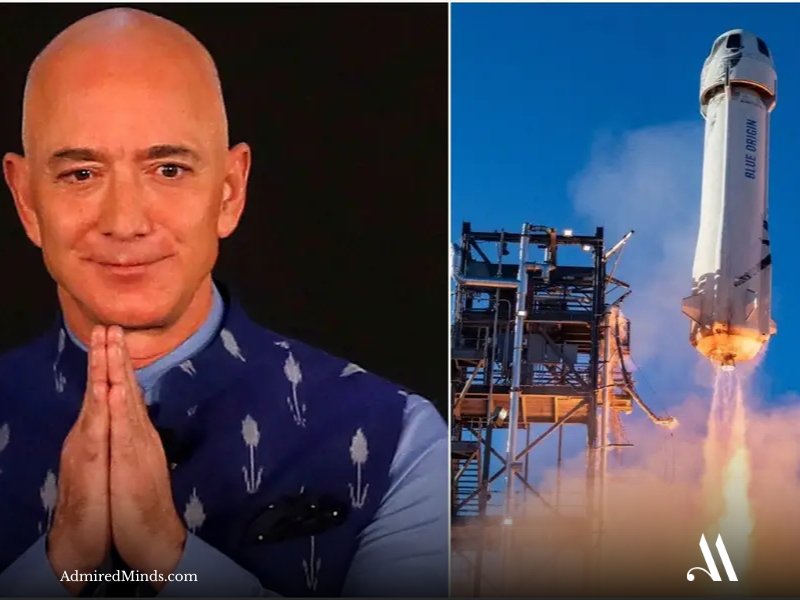
On July 5, 2021, Amazon founder Jeff Bezos stepped down as CEO to dedicate primary focus to Blue Origin space exploration, transitioning from e-commerce leadership to pursuing his vision of space commercialization and human space settlement. This case study examines how visionary entrepreneurs can execute strategic career pivots at peak business success to pursue transformational long-term missions that extend beyond traditional business optimization into civilization-scale impact initiatives.
Market Context and Financial Impact Assessment
Pre-Transition Market Position
Success is not final; failure is not fatal‚ it is the courage to continue that counts.
- Amazon commanding $469 billion annual revenue with 40%+ cloud infrastructure market dominance
- Bezos positioned as world’s wealthiest individual with $200+ billion net worth
- Blue Origin established in 2000 but operating in stealth mode with limited public visibility
- Space industry experiencing renaissance with SpaceX demonstrating commercial viability
Strategic Transition Metrics and Investment Scope
- Personal Investment: $10+ billion annual Blue Origin funding from Amazon stock liquidation
- Career Transition: CEO role to Executive Chairman, operational focus shift to space
- Market Opportunity: $400+ billion space economy with tourism, manufacturing, and mining potential
- Competitive Positioning: Direct competition with SpaceX and emerging space companies
- Vision Timeline: Multi-decade commitment to space infrastructure development
Strategic Decision Framework Analysis
Critical Assessment Parameters
Bezos’ space transition team identified three fundamental opportunity convergence factors:
- Space Market Maturation: Commercial space industry reaching critical mass with proven business models
- Personal Legacy Vision: Civilization-scale impact opportunity exceeding traditional business success
- Amazon Institutional Readiness: Company achieving sustainable leadership independence from founder presence
Opportunities don’t happen, you create them.
Strategic Options Evaluation Matrix
| Option | Approach | Personal Impact | Civilizational Legacy |
| Amazon Continuation | Maintain CEO role, space as secondary focus | Continued business success | Limited transformational impact |
| Dual Leadership | Shared attention between Amazon and space initiatives | Resource dilution risk | Moderate space progress |
| Complete Transition | Full focus on Blue Origin and space exploration | Maximum personal risk | Revolutionary potential |
| Advisory Role | Amazon guidance while building space expertise | Balanced approach | Delayed space leadership |
Implementation Strategy and Resource Allocation
Six-Pillar Space Vision Framework
1. Reusable Rocket Technology Development and Manufacturing Scale
- New Shepard: Suborbital tourism vehicle achieving operational commercial flights
- New Glenn: Orbital-class rocket competing directly with SpaceX Falcon Heavy
- Manufacturing Infrastructure: $2.5+ billion Texas and Florida production facilities
2. Space Tourism Market Creation and Commercial Operations
- Blue Origin Tourism: $450,000 per seat suborbital flights for civilian passengers
- Safety Standards: Rigorous testing protocols exceeding NASA human spaceflight requirements
- Market Development: Celebrity flights and media campaigns establishing space tourism viability
3. Lunar Infrastructure and Government Contract Strategy
- Blue Moon Lander: NASA Artemis program lunar lander development contract
- Lunar Gateway: Space station components and logistics support systems
- Government Relations: $10+ billion federal contract pursuit and space policy engagement
4. Space Manufacturing and Industrial Development Vision
- Orbital Factories: Zero-gravity manufacturing for specialized materials and products
- Space Resources: Asteroid mining and lunar resource extraction long-term planning
- Infrastructure Investment: Space-based solar power and manufacturing platform development
5. Educational Initiatives and Talent Development Programs
- STEM Education: $200+ million commitment to science and engineering education
- Space Camps: Youth programs inspiring next generation of space professionals
- University Partnerships: Research collaboration with aerospace engineering programs
6. Long-term Civilization Strategy and Space Settlement Planning
- O’Neill Cylinders: Space habitat design and construction for millions of residents
- Earth Preservation: Moving heavy industry to space to protect planetary environment
- Multi-Planetary Species: Human settlement expansion beyond Earth dependency
Enhanced Space Economy and Investment Architecture
Multi-Phase Revenue Development Components
- Space Tourism: $1+ billion annual revenue potential from suborbital and orbital flights
- Launch Services: Commercial satellite deployment and space station cargo delivery
- Government Contracts: NASA, Defense Department, and international space agency partnerships
- Space Manufacturing: Unique zero-gravity products and specialized materials production
What you do today can improve all your tomorrows.
Strategic Investment Program Framework
Technology Development: $3+ billion annual rocket, spacecraft, and infrastructure R&D
Manufacturing Capacity: Advanced production facilities for rockets and spacecraft
Talent Acquisition: Aerospace engineers and research scientists
Infrastructure Investment: Launch facilities, testing ranges, mission control systems
Performance Metrics and Outcome Analysis
Short-Term Transition Impact (2021-2023)
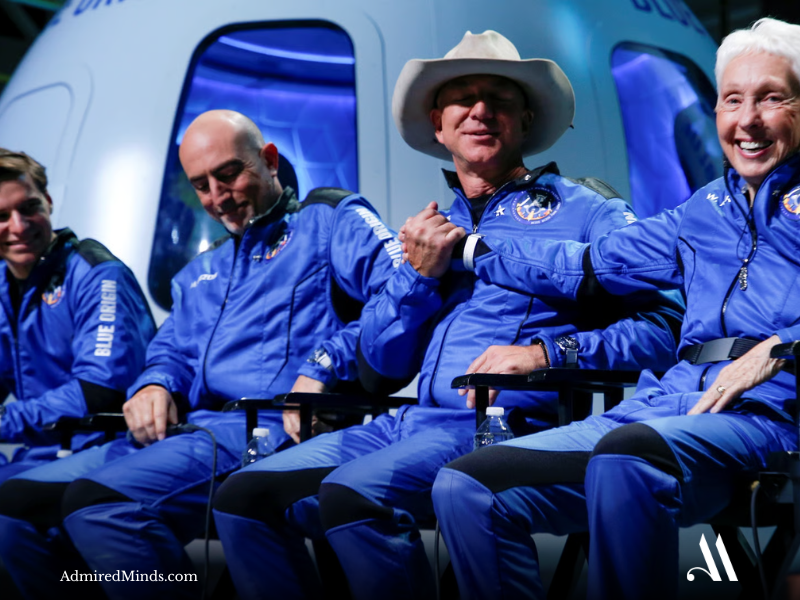
- Blue Origin Progress: Successful crewed flights and operational tourism service launch
- Amazon Performance: Continued growth under Andy Jassy leadership
- Space Market Position: Established credible SpaceX competitor
- Personal Brand: Global recognition as serious space exploration leader
Long-Term Vision Execution (2024-2030 Projections)
- Market Leadership: Potential capture of 20-30% launch market share
- Tourism Scale: 1,000+ civilian passengers annually
- Government Contracts: $20+ billion NASA and defense pipeline
- Technology Breakthrough: Orbital manufacturing and resource extraction
Return on Investment Analysis
- Personal Investment: $20+ billion cumulative Blue Origin funding
- Opportunity Cost: Amazon equity growth forgone
- Market Creation: Participation in $400+ billion space economy
- Strategic ROI: Civilization-scale impact and legacy value
Strategic Leadership Principles and Best Practices
Core Vision Transition Frameworks
1. Peak Success Transition Strategy
Leveraging business success peak moments enables resource deployment toward transformational long-term missions.
2. Institutional Independence Development
Building leadership capabilities independent of founder presence ensures smooth transition.
3. Personal Wealth Deployment
Investing financial success into humanity-benefiting projects creates long-term impact.
4. Multi-Decade Vision Commitment
Dedicating prime career years enables civilization-scale achievements.
5. Competitive Market Entry
Challenging market leaders requires sustained investment and technical excellence.
Decision-Making Framework for Visionary Career Transition
Five-Factor Legacy Vision Assessment Model
Personal Legacy Optimization: Career impact potential exceeding conventional success metrics
Financial Resource Deployment: Sustained investment capacity
Market Timing Assessment: Industry maturity
Institutional Readiness: Succession and leadership independence
Personal Risk Tolerance: Willingness to prioritize long-term impact
Risk Mitigation Success Indicators
Critical Transition Factors:
- Technology development progress
- Commercial market development
- Government contract acquisition
- Long-term vision movement toward space settlement
Strategic Performance Criteria:
- Market share capture
- Financial sustainability
- Technology breakthroughs
- Progress toward civilization-scale infrastructure
Conclusion and Strategic Implications
Jeff Bezos’ transition from Amazon CEO to Blue Origin demonstrates that entrepreneurs at peak success can pursue civilization-scale missions when supported by institutional independence and massive resource deployment. His decision represents investment in humanity‚Äôs long-term future beyond traditional business achievement.
This case study shows how converting financial success into systematic long-term vision execution enables transformational missions that exceed conventional entrepreneurial metrics.
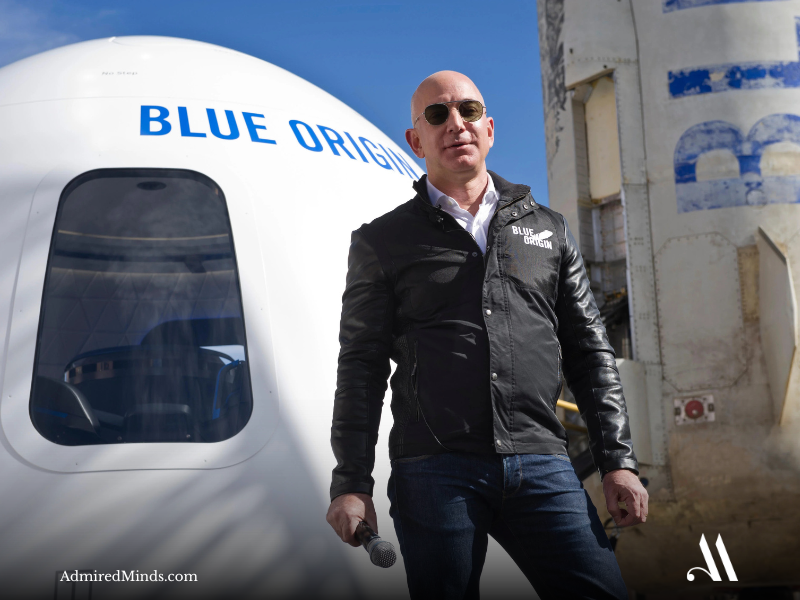
The Blue Origin model proves that visionary entrepreneurs can leverage peak career moments to pursue humanity-benefiting missions through sustained investment, competitive market entry, and long-term commitment.
The best way to predict your future is to create it.






Leave a comment