





The Leader Who Proved Empathy is Strategic Strength, Not Political Weakness
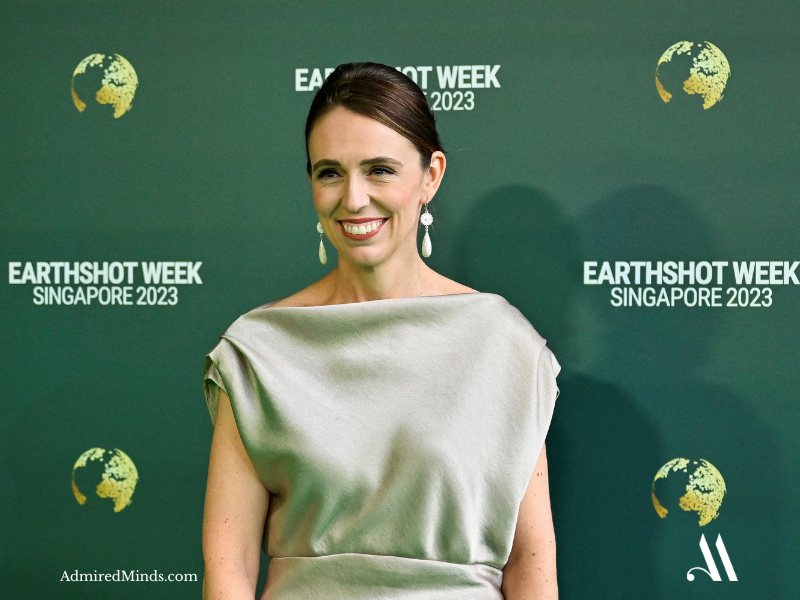
When Jacinda Ardern declared “they are us” following the Christchurch mosque shootings in 2019, the world witnessed a masterclass in empathetic leadership. Her response was morally courageous and strategically brilliant, transforming New Zealand’s global reputation while demonstrating that compassion is a competitive advantage in modern governance.
At 45, Ardern emerged as the world’s most influential advocate for empathetic leadership. Her post-political career includes founding the Field Fellowship for Empathetic Leadership and authoring “A Different Kind of Power”, establishing her as a leading voice on how emotional intelligence drives superior strategic outcomes.
“Empathy in leadership is not weakness; it‚Äôs strategic strength.”
Strategic Signature: Crisis Leadership Through Human Connection
Ardern’s defining strategic breakthrough came during her response to the Christchurch terrorist attack. Choosing vulnerability over traditional political messaging, she showed that authentic human connection produces superior crisis management outcomes. Her COVID-19 response and progressive policy initiatives further demonstrated that empathy can be a systematic framework rather than just emotional reaction.
The Empathetic Governance Revolution
Ardern‚Äôs principle of “pragmatic empathy” uses emotional intelligence as a strategic tool in policymaking and crisis response. Driven by values, she prioritized humanity alongside power, integrating empathy at every stage of decision-making.
- Transparent communication: Honest updates build public trust during uncertainty.
- Collaborative decision-making: Leveraging experts and collective effort, her leadership ensured high voluntary compliance during crises.
- Values-based policy: Emotional and social consequences considered alongside economic metrics for sustainable outcomes.
“Leadership that listens, cares, and connects creates stronger, more resilient societies.”
Leadership Philosophy: Strength Through Vulnerability
- Authenticity creates sustainable influence: Staying true to values earns deeper trust than performative actions.
- Collective responsibility accelerates solutions: Facilitating national effort builds ownership and commitment.
- Long-term relationship building: Empathy prioritizes sustained public trust over short-term political gains.
Business Impact: Measurable ROI of Empathetic Leadership
Ardern’s influence reshaped global crisis management approaches. New Zealand‚Äôs COVID-19 “elimination” strategy resulted in an 80% lower infection rate than the U.S., saving an estimated 20,000 lives. Her leadership earned international recognition, including Harvard University’s Gleitsman International Activist Award (2020) and Prospect magazine‚Äôs second-greatest thinker for the COVID-19 era.
Strategic Innovation: The Field Fellowship Framework

Through the Field Fellowship, Ardern scaled empathetic leadership principles to institutional programs, creating measurable frameworks for leadership impact across organizations and borders.
- Leadership development: Emotional intelligence training complements traditional political education.
- Network effects: Connecting empathetic leaders globally amplifies leadership impact.
- Evidence-based practice: Research and measurable outcomes validate empathy as a strategic tool.
Crisis Leadership: COVID-19 as Empathy Validation
From 2017–2023, Ardern navigated crises including mass shootings, floods, wildfires, bovine disease outbreaks, and COVID-19. Her strategy emphasized collective responsibility over authoritarian enforcement, generating higher compliance and trust, while demonstrating resilient crisis management through empathetic leadership.
Global Vision: Exporting Empathetic Leadership Worldwide
- International leadership education: Fellowships to train political leaders across Europe and beyond.
- Corporate consulting: Applying empathetic principles in business to create competitive advantages.
- Academic research and thought leadership: Establishing an evidence-based foundation for empathy-driven leadership.
The Ardern Strategic Legacy
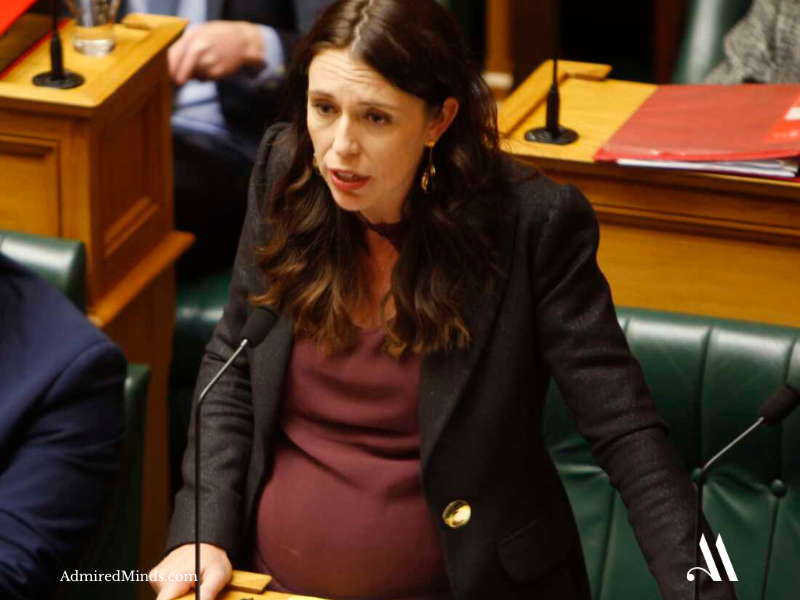
Ardern transformed leadership standards by demonstrating that vulnerability and strength complement each other. Her approach to crisis communication, stakeholder engagement, and trust-building offers a replicable framework for leaders worldwide.

Emotional intelligence is now recognized as a strategic capability, delivering measurable advantages when embedded in decision-making processes. Ardern’s model proves that empathy is not just a soft skill but a competitive advantage for modern leaders.










Leave a comment