




The 20 Girls Who Became 450,000 Women
When Reshma Saujani walked into her first Girls Who Code classroom in 2012 and saw just 20 nervous teenagers, venture capitalists questioned whether gender diversity in tech was a fundable problem. The computing industry had operated successfully for decades with predominantly male workforces, and previous diversity initiatives had produced minimal lasting change. Yet within a decade, her movement had reached 450,000 girls across 50 states, fundamentally shifting how Silicon Valley approaches talent development and workplace culture.
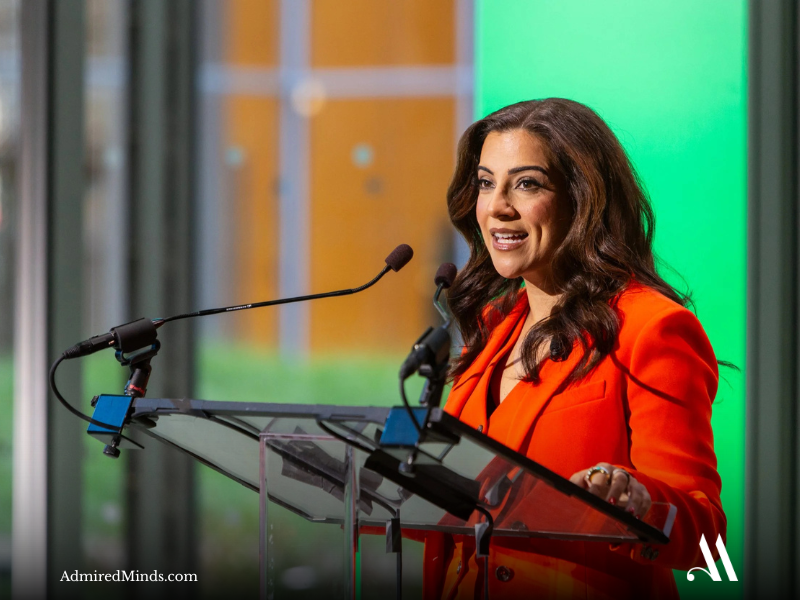
“We’re not just teaching girls to code, we’re teaching them to be brave,” Saujani declared during the organization’s first annual report presentation, articulating the systemic approach that would distinguish her movement from traditional skills training programs.

At 49, Saujani serves as Founder and CEO of Girls Who Code, where she has built the largest pipeline of future female engineers in the United States. Her journey from Wall Street lawyer to movement architect offers crucial insights for leaders seeking to create organizational change that transcends individual companies and transforms entire industries.
From Campaign Losses to Cultural Victories
Saujani’s path to movement building began not with early success but with high profile political failure. After a distinguished legal career at Davis Polk & Wardwell, she launched an ambitious campaign for New York Public Advocate in 2010, becoming the first Indian American woman to run for Congress. Despite raising significant funds and earning prominent endorsements, she lost decisively to established incumbent Carolyn Maloney.
The campaign failure provided strategic insights that would prove invaluable for movement building. Her experience navigating fundraising, coalition building, and message development revealed the mechanics of creating social change at scale. More importantly, the loss taught her that individual campaigns have limited impact compared to systemic interventions that change underlying structures.
The strategic insight that launched Girls Who Code emerged from analyzing the root causes of gender inequality in technology. While most diversity programs focused on hiring practices or workplace culture, Saujani identified the pipeline problem: girls weren’t learning computer science skills during formative educational years, creating barriers that hiring initiatives couldn’t overcome.
Creating the Bravery Over Perfection Movement Blueprint
Saujani’s approach to cultural change illustrates her framework for building movements that address systemic barriers rather than individual skill gaps. Creating lasting change requires identifying and dismantling the psychological, social, and structural factors that perpetuate inequality.
“We teach girls that perfection is the enemy of progress, and that failure is not something to avoid but something to learn from,” she explained during a 2018 TED talk that garnered over 4 million views.
The bravery framework demonstrated her unique strategic advantage: combining deep understanding of systemic barriers with practical intervention strategies that create measurable behavior change. This approach has become her signature methodology, identifying leverage points where individual development and systemic change intersect.
When Amazon Called: Scaling Impact Through Corporate Partnership
“Movements require resources, and resources come from organizations that benefit from the change you’re creating,” Saujani stated during the partnership announcement.

Beyond Coding: Building the Marshall Plan for Moms
Saujani sees gender equality challenges extending far beyond technology careers into fundamental questions about workplace flexibility, caregiving support, and economic security. The COVID-19 pandemic revealed how quickly progress could reverse when systemic support disappeared, with millions of women leaving the workforce due to childcare responsibilities.
Her strategic response included launching the Marshall Plan for Moms, advocating for comprehensive policy changes including universal childcare, paid family leave, and flexible work arrangements. She recognized that achieving gender parity in technology required addressing broader structural barriers that affected all working women.
Her advice for movement builders emphasizes systems thinking and coalition development: “Identify the root causes, not just the visible symptoms. Build movements that include everyone who benefits from change, not just those who are harmed by the status quo. Most importantly, measure success by sustainable systemic change, not just program participation numbers.”
Strategic Takeaways
Movement Building Architecture
- Identify systemic root causes rather than addressing surface level symptoms
- Build coalitions that include both beneficiaries and existing power holders
- Create sustainable funding models that align stakeholder incentives with movement goals
- Develop metrics that measure systemic change alongside individual program outcomes
Scaling Through Strategic Partnerships
- Negotiate corporate partnerships that require mutual accountability and behavior change
- Maintain organizational independence while leveraging partner resources and expertise
- Create value propositions that demonstrate business benefits of supporting social change
- Build relationships with decision makers who can implement policy and practice changes
Cultural Change Communication Strategy
- Reframe problems in ways that motivate action across diverse constituencies
- Use storytelling that connects individual experiences to broader systemic issues
- Develop messaging that appeals to both moral imperatives and practical benefits
- Create platforms that amplify participant voices rather than just organizational messages
Sustainable Impact Methodology
- Address psychological and social barriers alongside skill development needs
- Build programs that create lasting behavior change rather than temporary skill acquisition
- Develop leadership pipelines that enable participants to become movement advocates
- Measure success through long term career outcomes and industry culture shifts












Leave a comment