





The Crisis Leader Who Rebuilt Airbnb From Near-Collapse
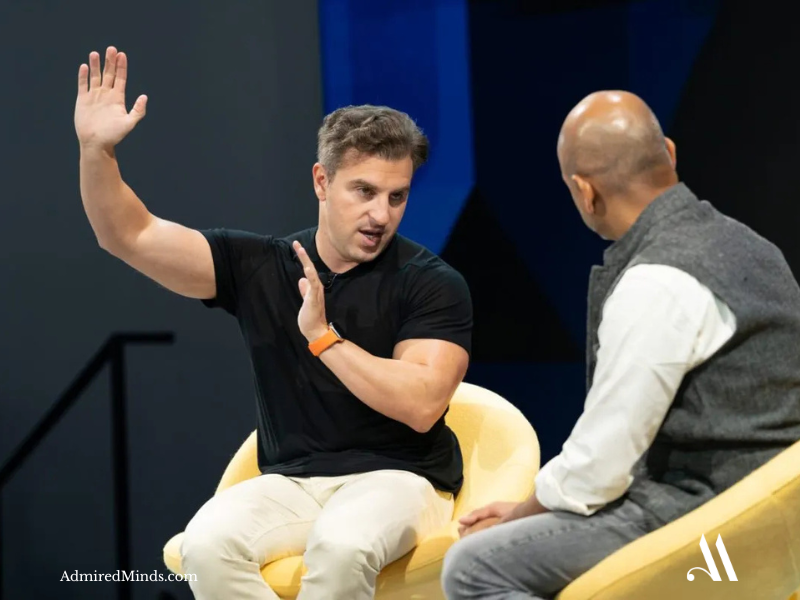
On May 5, 2020, Brian Chesky faced a decision that would define his leadership legacy. With Airbnb’s business down 95% overnight and investors questioning the company’s survival, conventional wisdom suggested quiet, surgical cuts to preserve cash. Instead, Chesky made a choice that stunned Silicon Valley: he would personally write a layoff letter to 1,900 employees‚Äî25% of Airbnb’s workforce‚Äîwithout legal jargon or corporate speak, then spend the next months personally helping them find new jobs by reaching out to his entire CEO network.
That decision to prioritize human dignity during existential crisis revealed strategic thinking that extends far beyond damage control. Rather than simply managing through the pandemic, Chesky transformed Airbnb’s entire business model, positioning the company to capture the remote work revolution and achieve record profitability by 2021.
At 42, Chesky has demonstrated what he calls “crisis-driven innovation,” using existential threats as catalysts for fundamental business evolution rather than mere survival. His approach to leading through near-collapse while simultaneously reimagining Airbnb’s future positions him as a strategic leader who understands how to balance stakeholder responsibility with transformational change during maximum uncertainty.
Cereal Boxes to Crisis Leadership: The Foundation of Values-Based Decision Making
Chesky’s approach to crisis leadership draws from lessons learned during Airbnb’s early survival periods, including the famous cereal box fundraising that kept the company alive in 2008. These experiences shaped what he calls “first principles leadership,” making decisions based on core values rather than conventional business wisdom during pressure situations.
His background in design thinking at Rhode Island School of Design proved crucial during the 2020 crisis. Rather than viewing the pandemic purely as a financial challenge, Chesky approached it as a design problem: how to maintain stakeholder trust while fundamentally restructuring operations for an unknown future state.
“The decisions you make in crisis define who you are as a leader and what your company stands for.”
The strategic insight that guided his crisis response emerged from recognizing that Airbnb’s long-term success depended more on cultural preservation than immediate cost optimization.
His preparation for extreme scenarios began years before COVID-19, influenced by studying companies that survived previous existential threats. This research informed his decision to build financial reserves and operational flexibility that proved essential when travel demand collapsed overnight.
The decision to personally draft the layoff letter, avoiding HR and legal jargon for a more heartfelt and human tone, revealed strategic thinking about communication during crisis. Rather than minimize personal responsibility, Chesky positioned himself as accountable for difficult decisions while maintaining transparency about reasoning and future vision.
Human-Centered Crisis Management: Redefining Leadership Through Unprecedented Disruption
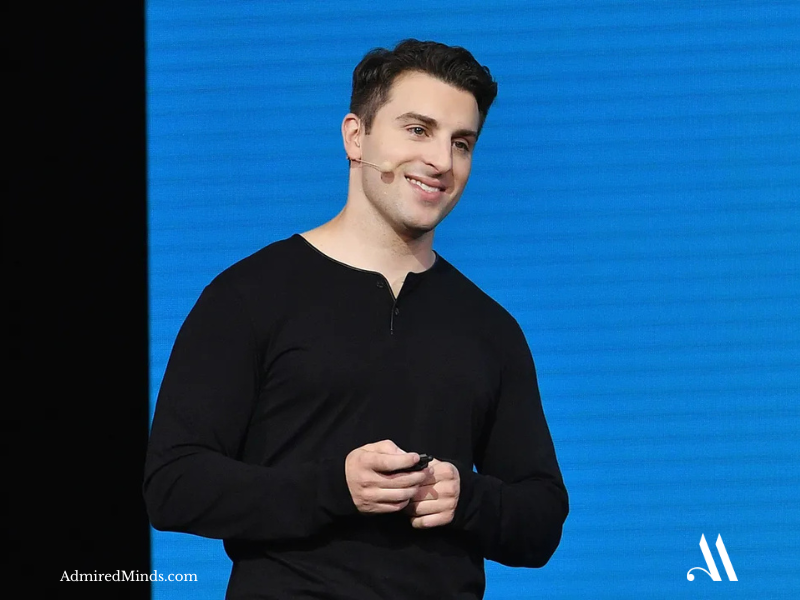
Chesky’s leadership during the 2020 crisis demonstrates sophisticated thinking about balancing immediate survival needs with long-term stakeholder relationships. His approach centered on what he terms “stakeholder-first crisis management,” making decisions that preserve trust even when creating short-term costs or complexity.
The severance package he announced included three months of salary and health insurance for a year, far exceeding industry standards during a period when cash conservation was critical. This decision reflected strategic understanding that employee treatment during crisis affects company reputation and future talent acquisition capabilities.
His most innovative crisis leadership decision involved creating an alumni directory system where laid-off employees could opt into a public directory to help them find new opportunities. Chesky then personally contacted other CEOs in his network to advocate for hiring displaced Airbnb employees, transforming layoffs from purely extractive decisions into ecosystem-building actions.
The communication strategy during this period reveals sophisticated understanding of crisis messaging. Instead of minimizing the severity or providing false optimism, Chesky communicated both the existential nature of the threat and his confidence in the company’s ability to emerge stronger. This approach built credibility during uncertainty while maintaining stakeholder commitment.
“I have a simple rule: we basically ask people to come to San Francisco one week a month.”
His framework for crisis decision-making involves what he calls “values stress-testing,” evaluating whether proposed actions align with stated company principles under extreme pressure. This process enabled consistent decision-making during rapid-fire crisis moments while preserving organizational culture through dramatic change.
The results validated his human-centered approach: Airbnb turned its business around from flirting with demise during the pandemic to achieving record performance, while maintaining employee satisfaction scores that exceeded pre-crisis levels among remaining team members.
Transformation Through Adversity: Strategic Pivot to Remote Work and Long-Term Stays
Chesky’s crisis leadership extended beyond survival tactics to fundamental business model evolution. Rather than waiting for travel to return to pre-pandemic patterns, he recognized that remote work would permanently change how people use accommodation platforms and repositioned Airbnb accordingly.
The strategic pivot involved identifying that remote and hybrid work had “untethered many people from the need to be in an office every day, driving the biggest change to travel since the advent of commercial flying” and that “for the first time, millions of people can now live anywhere.”
His approach to capturing this opportunity demonstrated strategic thinking about platform evolution. Instead of simply adding long-term stay features, Chesky reimagined Airbnb’s entire value proposition around flexible living rather than traditional vacation rentals. One out of every five gross nights booked became long-term stays, validating this strategic shift.
The internal transformation paralleled external strategy changes. Chesky made remote work permanent for Airbnb employees, adopting a ‘live and work anywhere’ model that aligned company culture with platform offerings. Starting in September, Airbnb’s more than 6,000 employees gained the choice to work for up to three months a year from over 170 countries.

His leadership philosophy during this transformation emphasized what he calls “authentic alignment,” ensuring that company policies and platform features reflect genuine understanding of user needs rather than marketing positioning.
“We’re not just building a travel company anymore. We’re building the foundation for how people will live and work in a location-independent world.”
Beyond Accommodation: Building the Infrastructure for Location-Independent Living
Chesky’s current strategic vision involves evolving Airbnb from accommodation platform into comprehensive infrastructure for location-independent lifestyles. His approach centers on what he describes as “ecosystem thinking,” building integrated services that support the entire remote living experience rather than just lodging transactions.
The expansion into long-term rentals and dining experiences aims to make Airbnb “more integral part of daily life,” reflecting strategic understanding of how successful platforms expand by deepening rather than broadening their core value proposition.
Looking ahead, Chesky identifies three strategic opportunities: integration of artificial intelligence into personalized travel recommendations, development of community-building features that support remote workers, and creation of host ecosystem services that generate sustainable income for property owners.
His long-term vision positions Airbnb as essential infrastructure for the remote work economy.
“The choices you make when everything is falling apart define your leadership more than any decision during good times.”
Four Strategic Frameworks for Crisis-Driven Transformation
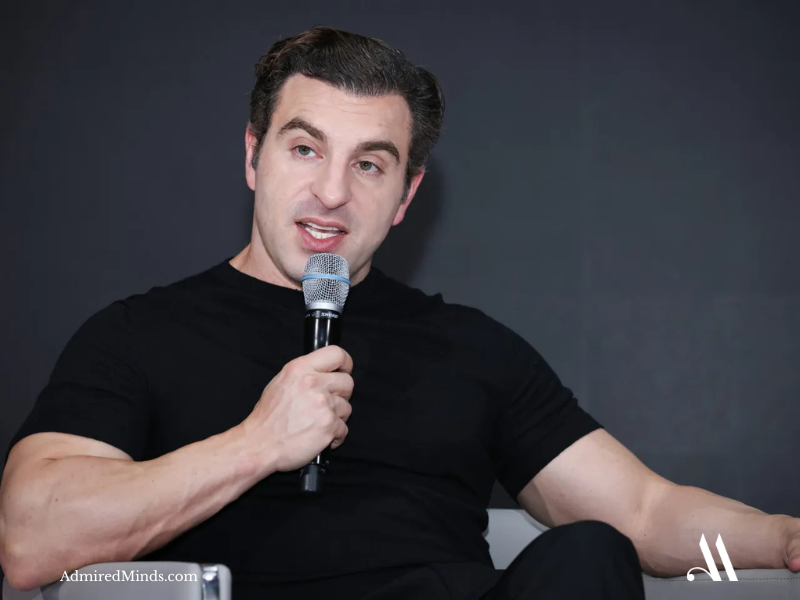
First Principles Crisis Leadership: During existential threats, make decisions based on core values rather than conventional wisdom or short-term optimization. Chesky’s approach prioritizes stakeholder relationships over immediate cost savings to preserve long-term strategic positioning.
Stakeholder-First Crisis Management: Structure crisis responses to maintain trust with employees, customers, and partners even when creating additional complexity or costs. This framework builds organizational resilience and reputation that accelerates recovery.
Values Stress-Testing Framework: Evaluate crisis decisions by assessing whether proposed actions align with stated principles under extreme pressure. This process ensures consistent leadership and cultural preservation during rapid change periods.
Crisis-Driven Innovation Strategy: Use existential threats as catalysts for fundamental business model evolution rather than just survival tactics. Chesky’s approach identifies permanent changes in user behavior during crisis periods and repositions platform capabilities accordingly.








Leave a comment