




Executive Summary
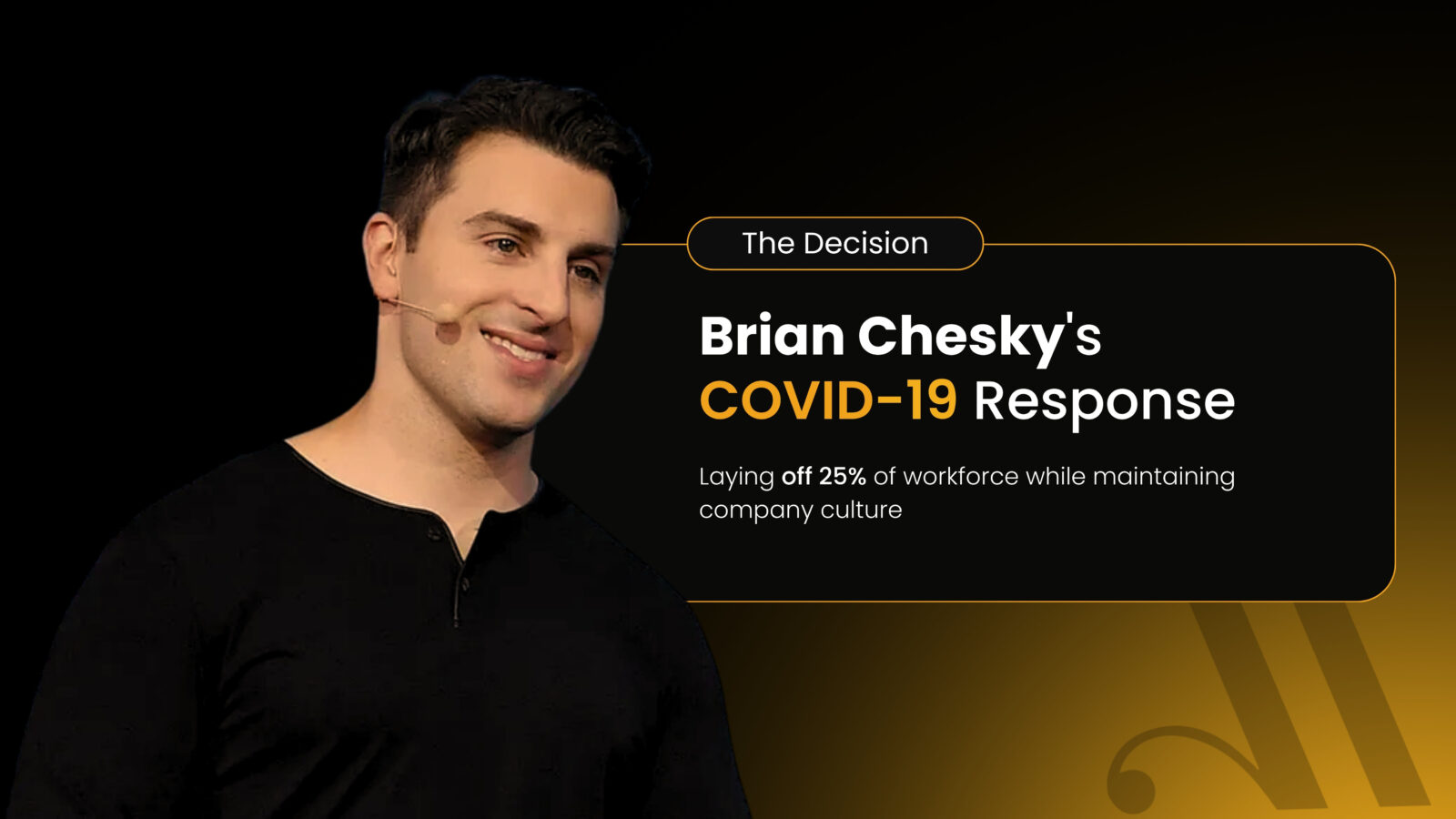
On May 5, 2020, Airbnb CEO Brian Chesky executed one of the most strategically significant workforce reductions of the decade. Eliminating 25% of the company’s staff during a global crisis, Chesky paired operational cuts with counter-intuitive investments in culture, transparency, and employee care, transforming a potential collapse into a long-term competitive advantage.

“Culture is simply a shared way of doing something with passion.”
— Brian Chesky
Market Context and Financial Impact Assessment
Pre-Crisis Market Position
- Airbnb projected as the, hottest IPO of 2020
- Valuation approaching $31 billion
- Rapid expansion across multiple travel and hospitality verticals
Crisis Metrics and Financial Deterioration
- Revenue Decline: 80% booking collapse within 30 days
- Workforce Impact: 1,900 of 7,500 roles eliminated
- Future Forecast: Only 50% of 2019’s revenue expected in next fiscal year
- Liquidity Needs: $2 billion emergency funding secured
Strategic Decision Framework Analysis
Critical Assessment Parameters
Chesky’s leadership team made decisions guided by two crucial market realities:
- Temporal Uncertainty: No clear timeline for travel recovery
- Structural Change: Post-pandemic travel would require a redesigned business model
Strategic Options Evaluation Matrix
| Option | Approach | Cost Structure | Risk Profile |
| Standard Reduction | Basic severance, standard HR process | Lowest cost | Massive cultural damage |
| Corporate Standard | 8-12 weeks severance | Moderate | Possible misalignment with values |
| Value-Aligned Investment | 14+ weeks pay, extended support | $2M+ premium | Investor pushback risk |
| Delay Strategy | Rollout cuts slowly | High risk | Potential organizational failure |
Implementation Strategy and Resource Allocation
Five-Pillar Strategic Framework

1. Strategic Alignment and Portfolio Optimization
- Core focus on home-sharing platform
- Temporary suspension of Studios and Transportation divisions
- Scaling down Hotels and Luxury segments
2. Stakeholder Value Maximization
- Support strategy grounded in going beyond legal requirements
- Unprecedented severance and benefits package
3. Diversity and Inclusion Preservation
- Priority: Maintain diversity during downsizing
- Protection protocols for underrepresented groups
4. Communication Excellence
- Direct, human-centered communication
- One-to-one conversations over mass emails
5. Information Integrity and Transparency
- Full disclosure with complete details
- All information finalized before announcement
Enhanced Severance and Support Program Architecture
Financial Package Components
- Base Severance: 14 weeks + tenure scaling
- Healthcare: 12-month full coverage
- Equity: Removal of one-year vesting cliff
- Equipment: Departing employees keep company laptops
Five-Program Placement Ecosystem
- Alumni Talent Directory
- Dedicated Placement Team
- RiseSmart Career Transition Services
- Peer Support Network
- Executive Advocacy Network

Performance Metrics and Outcome Analysis
Short-Term Impact (3-6 Months)
- Global media praise for crisis leadership
- Stronger engagement from retained employees
- Boosted employer brand and talent attraction
- Faster-than-expected financial stabilization
Long-Term Strategic Benefits (1-3 Years)
- IPO Valuation: $47B in Dec 2020
- Competitive Advantage: Human-centered leadership as differentiator
- Industry Benchmark: Model adopted by competitors
- Resilience: Higher long-term employee engagement
Return on Investment Analysis
- Extra Investment: $2M+ above standard severance
- Valuation Impact: $1B+ IPO premium
- ROI: ~500:1
Strategic Leadership Principles and Best Practices
Core Leadership Frameworks
1. Values-Based Differentiation: Using values as a competitive edge.
2. Authentic Leadership Premium: Loyalty increases when actions match principles.
3. Crisis Communication Advantage: Human-centered messaging creates organic goodwill.
4. Paradoxical Investment: Supporting departing employees strengthens those who remain.
5. Strategic Positioning: Crisis response determines long-term market positioning.
Decision-Making Framework for Crisis Leadership
Five-Factor Assessment Model
- Survival Requirements
- Values Alignment
- Stakeholder Optimization
- Competitive Advantage Creation
- Cultural Preservation
Risk Mitigation Indicators
Critical Pitfalls to Avoid:
- Delegating existential decisions downward
- Optimizing only for short-term financials
- Ignoring cultural context
- Lack of transparency in communication
Success Indicators:
- High engagement among retained employees
- Talent attraction improves post-crisis
- Positive public/media perception
- Clear long-term competitive positioning

Conclusion and Strategic Implications
Chesky’s strategy demonstrates that crisis decisions do not have to sacrifice values. Instead, values-driven action can amplify competitive advantage, strengthen culture, and drive long-term market success. His $2M investment in people produced an estimated $1B valuation gain, proving that empathy, transparency, and courage can outperform traditional cost-cutting strategies.
Ultimately, this case reveals a powerful truth: how an organization survives determines the strength of its comeback.
“The best founders are missionaries, not mercenaries.”
— Brian Chesky









Leave a comment