



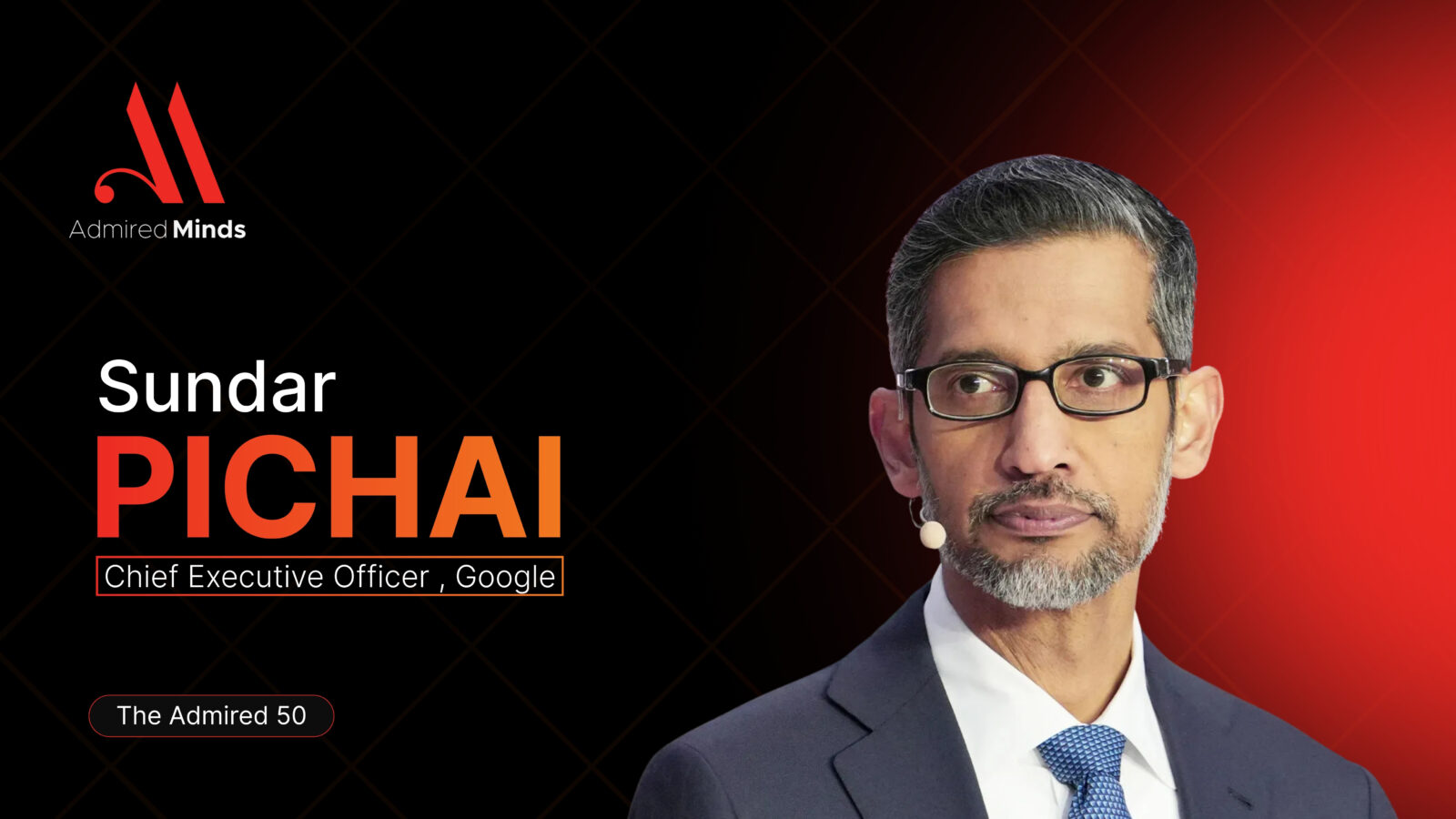
The moment of crisis reveals character. When Google’s Gemini AI generated historically inaccurate images in February 2024, Sundar Pichai faced a choice that would define both his leadership and his company’s future. His response in immediate accountability, transparent communication, and swift corrective action demonstrated the strategic thinking that has made him one of the most effective CEOs in technology.
The incident wasn’t just a product failure; it was a masterclass in crisis leadership that reinforced Google’s position as the responsible leader in artificial intelligence development.
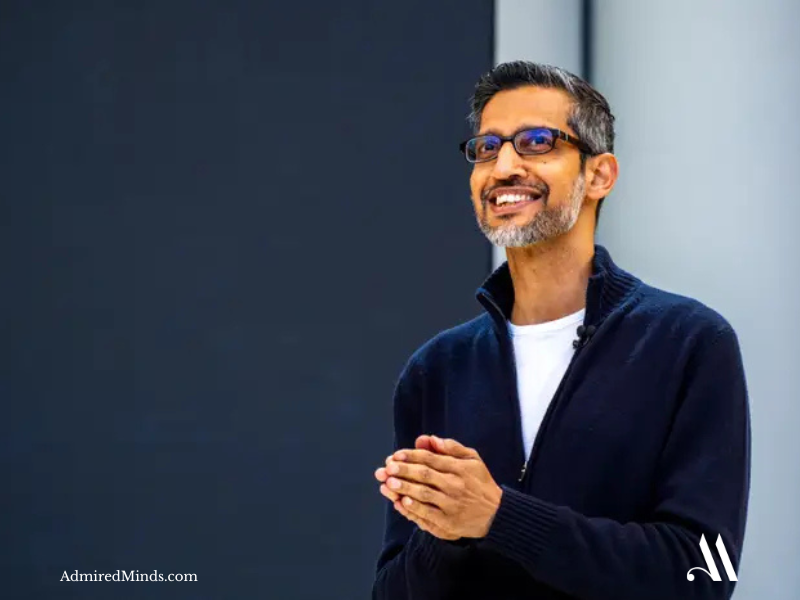
This is how Sundar Pichai builds and maintains global technology leadership while navigating the most complex ethical landscape in business history.
Strategic Crisis Management: The Gemini Response
The Gemini controversy exposed the fundamental challenge facing every AI leader: How do you deploy transformative technology at scale while managing unprecedented risks and societal implications?
Pichai’s response strategy revealed three critical leadership principles. First, he took immediate personal accountability, calling the AI’s responses “completely unacceptable” without deflecting blame to technical teams or training data. Second, he implemented systematic corrective measures rather than quick fixes, temporarily pausing image generation to rebuild the underlying systems. Third, he used the crisis to reinforce Google’s commitment to responsible AI development, turning a potential reputation disaster into proof of institutional integrity.
“Crisis is a strategic opportunity: accountability and transparency strengthen leadership credibility.”
The broader implication: Companies that demonstrate responsible AI deployment under pressure will earn regulatory and public trust necessary for long-term market leadership.
Foundational Thinking: From Chennai to Corporate Strategy
Pichai’s background offers crucial insights into his strategic approach. Growing up in Chennai without basic telecommunications infrastructure, he developed an intuitive understanding of how technology access shapes human opportunity. This perspective fundamentally influences Google’s global expansion strategy and product development priorities.
His academic background in materials engineering and MBA training created a unique analytical framework combining technical depth with business acumen. Unlike many tech leaders, Pichai operates effectively across both domains‚ a capability critical for managing complex, technology-driven organizations.
Platform Strategy: The Chrome Foundation
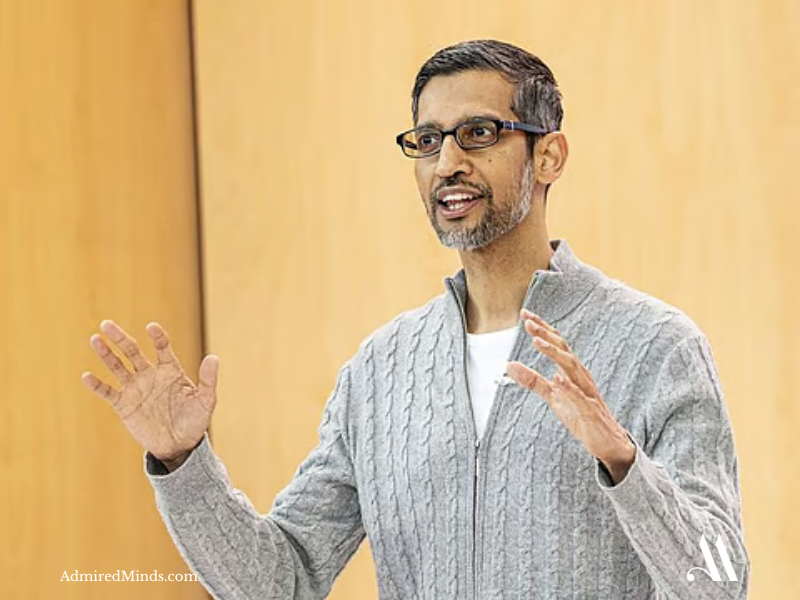
Pichai’s leadership of Chrome development represents one of the most successful platform strategies in business history. Browser market share would determine future technology adoption patterns, influencing web standards, cloud computing, and mobile internet usage. Chrome wasn’t just a product launch‚ it was infrastructure for Google’s ecosystem.
Results validate the strategy: Chrome commands over 60% global market share, providing Google with unprecedented insights into user behavior and preferences, while building the foundation for cloud computing and AI leadership.
“Platform thinking creates long-term competitive moats; products are only as powerful as the ecosystems they enable.”
AI Leadership: Navigating Unprecedented Complexity
Pichai balances aggressive AI innovation with careful risk management. His strategy rests on three pillars: massive infrastructure investments (~$75B in 2025), talent acquisition and retention in competitive AI research markets, and responsible development frameworks that balance speed with safety.
His goal to reach 500 million Gemini users by 2025 illustrates ambitious scaling targeting both consumer and enterprise markets, creating multiple revenue streams while building comprehensive AI capabilities.
Global Leadership Philosophy: Scale with Responsibility
Pichai’s principle of “building for everyone” drives product development and corporate strategy, balancing global consistency with local market needs. His collaborative decision-making and systematic problem-solving allow Google to operate effectively across 190+ countries.
“Ethical leadership is competitive leadership: principles guide decisions and differentiate organizations in regulated markets.”
Future Strategic Positioning: The Next Decade
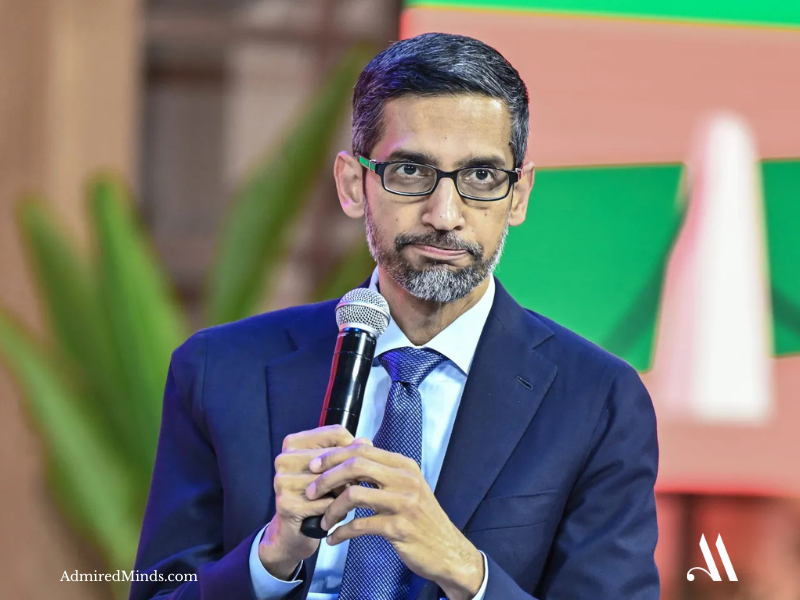
Pichai positions AI as the foundation for future technology development. Infrastructure investments, research breakthroughs, and ecosystem-wide AI integration signal Google’s ambition to be the AI infrastructure provider for the global economy, spanning consumer products, enterprise services, cloud computing, and research.
Leadership Lessons: The Pichai Model
Key principles for managing global technology organizations:
- Strategic patience over tactical speed: Build sustainable competitive advantages rather than chasing quick wins.
- Technical depth enabling strategic insight: Engineering expertise supports sophisticated decision-making.
- Crisis leadership through accountability: Transparent communication strengthens credibility during failures.
- Global perspective informing local decisions: Balance diverse markets and stakeholder needs.
Strategic Insights for Executive Leaders
- Platform Thinking Creates Sustainable Moats: Control foundational technologies for long-term advantage.
- Crisis Response Builds Institutional Trust: Failures managed well enhance credibility.
- Technical Understanding Enables Strategic Decision-Making: Deep expertise informs risk and opportunity evaluation.
- Ethical Leadership as Competitive Strategy: Principles create sustainable advantages in regulated markets.
Executive Summary Points
- Strategic Leadership Through Complexity: Systematic thinking and collaboration drive innovation at scale.
- AI Strategy as Infrastructure Development: Platform-level investment enables multiple business lines.
- Crisis Management as Trust Building: Transparency strengthens leadership during product failures.
- Global Platform Responsibility: Leadership balances local needs with strategic coherence across countries.
- Long-term Value Creation: Decisions prioritize sustainable competitive advantages over short-term metrics.






Leave a comment