





The Visionary Who Proved Poverty is a Market Failure, Not a Personal One
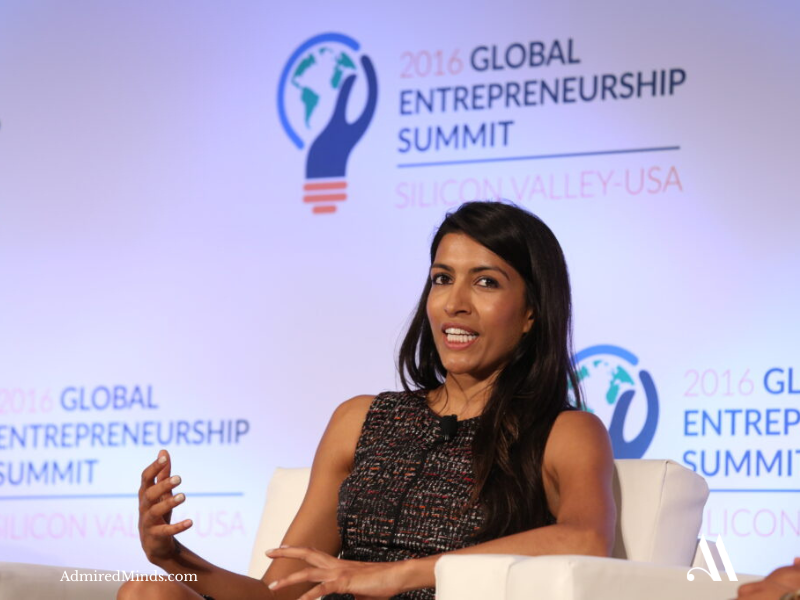
When Leila Janah declared that “the greatest challenge of the next 50 years will be to create dignified work for everyone,” many dismissed it as Silicon Valley idealism. Yet her life‚Äôs work proved that poverty results from systemic market failure ‚Äî not a lack of talent or ambition.
“Talent is equally distributed, but opportunity is not.”
Before her passing at just 37, Janah had reshaped global development thinking. Through Sama Group, she built a revenue-generating model that lifted over 50,000 people out of poverty across Kenya, Uganda, and India — demonstrating that dignified digital work can become an engine of economic transformation.

Strategic Signature: Impact Sourcing as Economic Justice
Janah recognized that poverty was not a charitable cause but a labor-market inefficiency. Her breakthrough model trained women and youth from low-income communities in data annotation and connected them to Fortune 500 clients.
“Give work, not aid.”
Samasource pioneered the idea that digital labor could be distributed globally — turning microtasking into a stable, living-wage opportunity for thousands. Her philosophy focused on unlocking human potential wherever it exists.
The Dignified Work Revolution
Janah reframed poverty intervention: instead of providing charity, she built sustainable engines of employment. Her framework integrated three pillars: eliminating the digital divide, guaranteeing living wages, and forming direct corporate partnerships that bypassed traditional aid systems.
Leadership Philosophy: Market Solutions for Systemic Problems
Her core belief: dignified work creates dignity, and economic empowerment must replace dependency. Technology serves as a democratising force, enabling individuals in developing nations to participate meaningfully in global markets.
“Dignity comes from being able to support yourself and your family.”
Business Impact: Creating the Impact Sourcing Industry
Janah didn’t just build a company — she built a category. Today, impact sourcing is globally recognized, with corporations evaluating outsourcing choices based on both performance and social outcomes. Sama’s model raised incomes up to 400% for young African workers and set new ethical benchmarks for AI data supply chains.
Strategic Innovation: The Give Work Movement
Through Samaschool, the Leila Janah Foundation, and the Give Work Challenge, Janah created a scalable ecosystem — combining training, employment, entrepreneurial funding, and policy influence. These interconnected systems continue empowering thousands.

Global Vision: Technology as Poverty Alleviation Infrastructure
Janah believed technology could eliminate geographic barriers to healthcare, education, and economic mobility. Through Samahope, she pioneered a medical crowdfunding platform that directly funded treatments for women and children in impoverished communities.
“The future of poverty alleviation lies in market-based solutions.”
Why Janah Redefined Strategic Leadership
She proved that profitable businesses can generate powerful social impact. By treating poverty as a market failure, she created models that deliver both financial returns and transformative human outcomes — reshaping how companies, investors, and policymakers think about development.
The Janah Strategic Legacy
Today, Sama’s impact continues to grow — reducing carbon emissions, expanding renewable energy, advancing ethical AI practices, and upskilling thousands across Africa and Asia. Janah’s principle remains timeless: purpose and performance reinforce each other.











Leave a comment