




Executive Summary
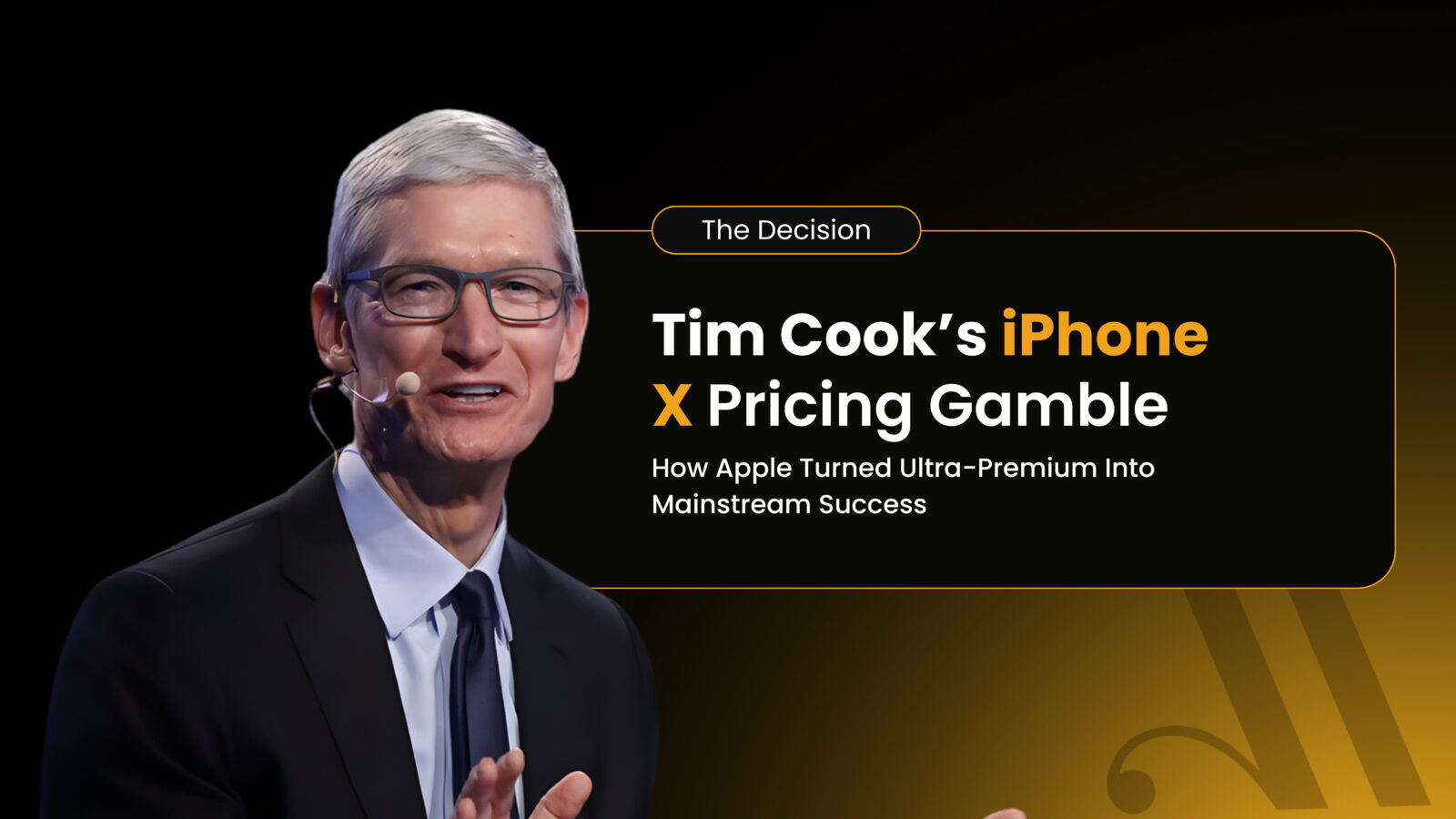
On November 3, 2017, Apple CEO Tim Cook launched the iPhone X at $999, breaking the psychological $1,000 price barrier and establishing the ultra-premium smartphone category despite widespread market skepticism about consumer willingness to pay. This case study examines how contrarian premium pricing strategies during market maturity can create new luxury segments while maintaining mass market dominance through portfolio segmentation.

Pricing is not just a number ‚ it is a statement of confidence, innovation, and identity.
Market Context and Financial Impact Assessment
Pre-Launch Market Position
- iPhone commanding 13‚15% global market share with 80%+ profit share
- Industry-wide ASP declining due to Android competition
- Apple‚ is ASP plateauing at $650‚700
- Analysts predicting high price sensitivity at premium tier
Premium Strategy Metrics and Investment Scope
- Price Innovation: $999 price = 43% premium over iPhone 8
- Technology Investment: $5B+ for Face ID, OLED, wireless charging
- Market Risk: Possible demand drop due to pricing
- Competitive Positioning: 2-3x cost vs Android flagships
- Portfolio Strategy: iPhone 8 kept at traditional pricing
Consumers don’t always buy the cheapest ‚ they buy what feels worth paying for.
Strategic Decision Framework Analysis

Critical Assessment Parameters
Cook’s team identified three key opportunities:
- Consumer Luxury Appetite: Desire for ultra-premium experiences
- Technology Differentiation: Innovations supporting higher prices
- Brand Equity Strength: Loyalty enabling elasticity
Strategic Options Evaluation Matrix
| Option | Approach | Revenue Impact | Market Risk |
| Conservative Pricing | $799‚849 | Moderate | Low diff., margin pressure |
| Premium Positioning | $899‚949 | Strong | Moderate |
| Ultra-Premium | $999+ | Maximum | High rejection risk |
| Dual-Tier Launch | Budget + premium | Complex | Cannibalization risk |
Implementation Strategy and Resource Allocation
Five-Pillar Ultra-Premium Framework
1. Technology Integration
- Face ID: 3D facial authentication
- OLED Display: Edge-to-edge premium screen
- Wireless Tech: Qi charging + computational photography
2. Manufacturing Excellence
- Premium Components: Surgical-grade steel
- Supply Chain: $10B+ in advanced equipment
- Quality Standards: Enhanced durability tests
3. Luxury Brand Marketing
- Messaging: The future of the smartphone
- Premium retail experiences
- Theatrical launch events
4. Portfolio Architecture
- iPhone X + iPhone 8 tiers
- Market expansion
- Upgrade incentives via trade-in
5. Developer Ecosystem
- Apps optimized for Face ID + OLED
- Premium content experiences
- High-margin accessory ecosystem
Innovation is what turns a product into a necessity ‚ even at a premium.
Enhanced Value Proposition and Revenue Architecture
Premium Revenue Components
- 60%+ hardware margins
- Services expansion ‚ iCloud, App Store, Apple Care
- Accessories: AirPods, chargers, cases
- Brand licensing advantages
Performance Metrics and Outcome Analysis
Short-Term Market Response
- 29M+ units in first quarter
- $88.3B quarter ‚highest in Apple history
- Captured ultra-premium segment
- Minimal price resistance
Long-Term Strategic Victory (2018–2023)
- $1000+ category normalized across competitors
- Revenue grew from $141B ‚$200B+
- Services revenue reached $85B+
- Apple captured 75%+ of global smartphone profits
Premium markets aren’t found ‚they’re created through bold decisions.
Return on Investment Analysis
- $8B in development
- $1B+ marketing
- $300B+ incremental premium revenue
- 3300%+ strategic ROI

Strategic Leadership Principles and Best Practices
Core Frameworks
1. Premium Psychology Theory: Higher pricing can increase demand.
2. Brand Equity Monetization: Loyalty expands price elasticity.
3. Market Segmentation Creation: First mover defines category.
4. Portfolio Risk Management: Premium + traditional tiers.
5. Innovation-Justified Premium: Technology validates price.
Decision-Making Framework for Ultra-Premium Strategy
Leadership must evaluate brand strength, innovation depth, segmentation potential, consumer psychology, and competitive timelines.
Risk Mitigation Indicators
- Adoption rates
- Share retention
- Competitor response
- Brand perception
Strategic Performance Metrics
- ASP and revenue per customer
- Ultra-premium segment capture
- Margin expansion
- Long-term brand strength
Conclusion
The iPhone X strategy proved that bold premium pricing can create entire market categories while sustaining mass market presence. With $300B+ generated from this strategy, Apple reshaped industry economics and established the ultra-premium smartphone segment as a global standard.

The model demonstrates how companies with strong brand loyalty and innovation capacity can redefine price expectations and secure long-term competitive advantage.









Leave a comment