




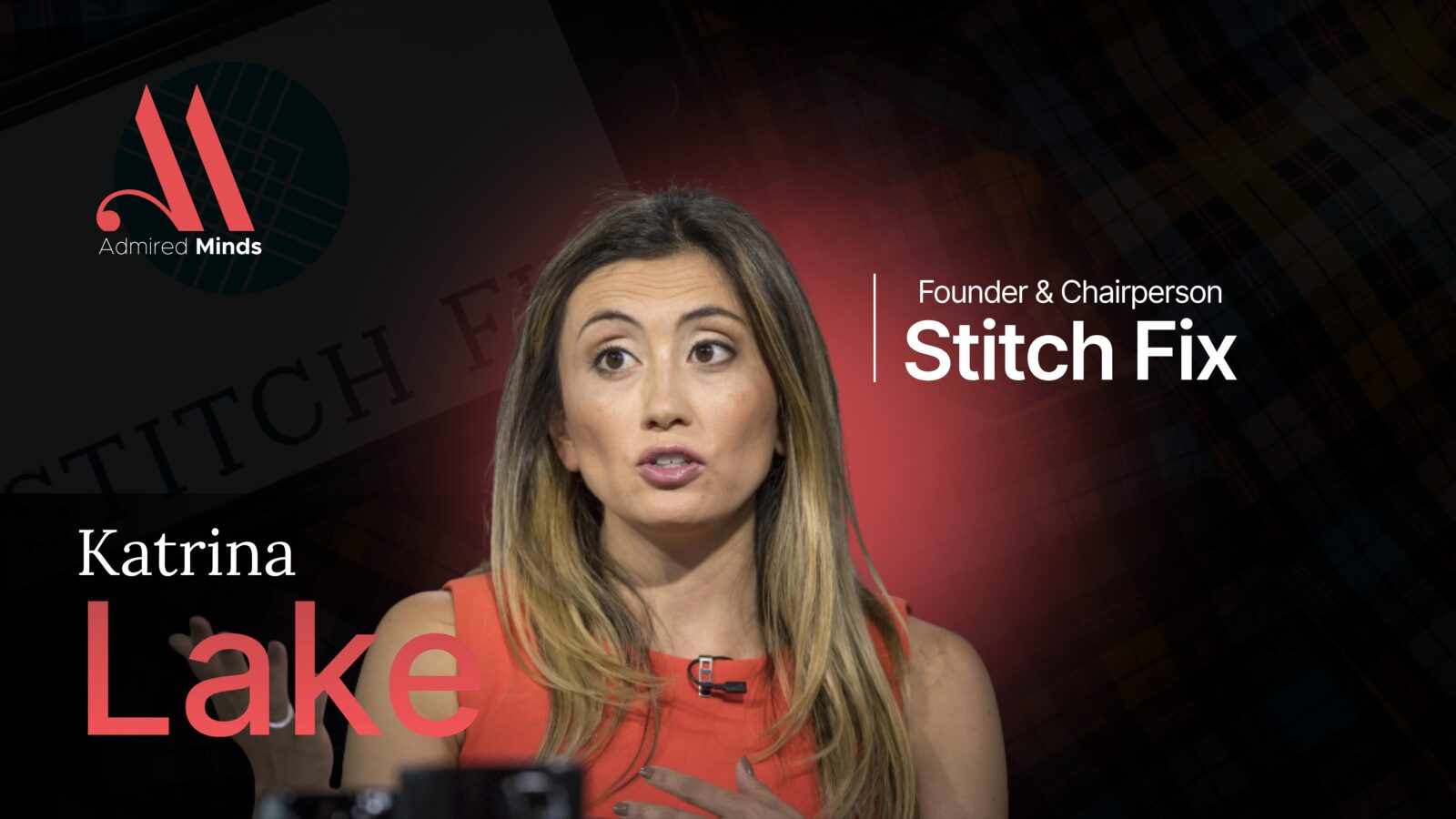
The Algorithm Architect Who Solved Fashion at Scale

In 2011, when Katrina Lake proposed building a company around “data-driven fashion curation,” venture capitalists questioned whether algorithms could understand something as subjective as personal style. Fashion had always been about intuition, taste, and human expertise could mathematical models really replace stylists’ trained eyes? Lake made a strategic bet that seemed to contradict the entire industry: combining data-driven algorithms with human expertise to create a personalized shopping experience at unprecedented scale.
That contrarian vision transformed fashion retail. By 2017, Lake became the youngest woman to take a company public at age 34 and was the only woman in 2017 to lead an initial public offering in technology. Stitch Fix now serves nearly 4 million clients with annual revenue of $1.7 billion, proving that data science could solve fashion’s most complex challenge: delivering personal style recommendations at massive scale.
At 41, Lake has demonstrated what she calls “algorithmic empathy” using machine learning not to replace human judgment, but to enhance it systematically. Her approach to building teams of dozens of data scientists to deliver personalization on a massive scale positions her as a strategic leader who understands how to combine artificial intelligence with human expertise to solve previously unsolvable business problems.
From Harvard MBA Project to Algorithmic Fashion Pioneer: The Foundation of Data-Driven Retail
Lake’s path to algorithmic fashion began with recognizing a fundamental market failure that others had accepted as inevitable. While traditional retail offered overwhelming choice or limited curation, she identified an opportunity to use data science to bridge personal preference with systematic discovery at scale.
Her strategic insight emerged from understanding that fashion retail wasn’t just about inventory management it was about solving a complex matching problem between individual preferences and available products. “Personal styling seemed like this artisanal thing that could never be automated,” Lake explains, “but I realized that if we could systematize the decision-making process, we could deliver better recommendations than traditional retail.”
The business model Lake developed reflects sophisticated thinking about data collection and customer experience design. Rather than asking customers to browse catalogs, Stitch Fix built comprehensive preference profiles through detailed questionnaires, purchase behavior analysis, and feedback loops that continuously improved algorithmic accuracy.
Her approach to team building revealed early understanding of how data science requires different organizational structures than traditional retail. Instead of hiring fashion buyers with industry experience, Lake recruited data scientists, engineers, and stylists who could work together to translate personal preference into algorithmic logic.

The key strategic decision was recognizing that successful personalization required combining data science machine learning, AI and natural language processing and human stylists; on top of complex customer profiles built by data, stylists can layer the nuances of buying and wearing clothes. This hybrid approach created competitive advantages that pure technology or traditional styling couldn’t achieve.
Human-Algorithm Collaboration: The Strategic Architecture of Personalization at Scale
Lake’s approach to data-driven personalization demonstrates sophisticated understanding of how artificial intelligence can enhance rather than replace human expertise. Her methodology centers on what she describes as “augmented curation” using algorithms to process vast amounts of data while preserving human judgment for complex aesthetic decisions.
The technical architecture she built reflects deep thinking about personalization systems. Machine learning algorithms are at the core of the company’s business model, underpinning everything from client styling and logistics to inventory management and product design. This comprehensive integration created systematic advantages across the entire value chain.
Her framework for human-algorithm collaboration involves three strategic layers: data collection that captures both explicit preferences and implicit behavioral signals, algorithmic processing that identifies patterns across millions of customer interactions, and human curation that applies contextual understanding to final selections.
The innovation in this approach was recognizing that fashion personalization requires understanding not just what customers like, but why they like it, when they would wear it, and how it fits into their existing wardrobe. This complexity demanded algorithmic systems sophisticated enough to process multidimensional preference data while remaining interpretable to human stylists.

The company leverages data science to deliver personalization at scale, transcending traditional brick-and-mortar and e-commerce retail experiences, creating customer satisfaction rates that consistently exceed traditional retail benchmarks while maintaining gross margins that support sustainable growth.
Building Data Science Culture: Leadership That Scales Technical Excellence
Lake’s leadership philosophy centers on what she calls “technical empathy” building organizational culture where data scientists, stylists, and business leaders understand each other’s expertise and decision-making processes. This approach proved essential for creating products that satisfy both technical and aesthetic requirements.
Her hiring strategy reflects sophisticated understanding of interdisciplinary team dynamics. Rather than segregating technical and creative functions, Lake built integrated teams where data scientists work directly with stylists to understand the nuanced factors that influence style recommendations.
The organizational structure she created enables rapid iteration on personalization algorithms while maintaining quality control over customer experience. Teams have autonomy to experiment with new approaches while following systematic testing protocols that ensure changes improve rather than degrade recommendation quality.
Her approach to crisis management during periods of rapid growth demonstrates values-based leadership under pressure. When scaling challenges threatened service quality, Lake consistently prioritized long-term customer satisfaction over short-term growth metrics, investing in infrastructure and team expansion to maintain personalization quality.
The investment in proprietary technology development, including unique solutions in data-driven merchandising, massively scaled personal styling, and complex logistics, created sustainable competitive advantages that traditional retailers couldn’t easily replicate.
Beyond Fashion: Strategic Vision for Algorithmic Commerce and AI-Enhanced Experiences
Lake’s current strategic focus involves expanding the principles of data-driven personalization beyond fashion to other categories where individual preferences create complex matching challenges. Her vision centers on what she describes as “algorithmic commerce” using artificial intelligence to solve systematic personalization problems across different industries.
The evolution from fashion-only to lifestyle categories demonstrates strategic thinking about platform expansion. Rather than simply adding products, Lake is building capabilities that can understand preference patterns across different types of personal choices while maintaining the quality that made fashion personalization successful.
Looking ahead, Lake says the company is laying the groundwork for growth as it improves its algorithms and crunches more data than ever before, identifying opportunities where artificial intelligence can create better customer experiences through systematic personalization.
Her long-term vision involves what she calls “predictive commerce” systems that can anticipate customer needs and preferences before they explicitly express them, creating shopping experiences that feel almost intuitive in their relevance and timing.
For emerging leaders building data-driven businesses, Lake emphasizes the importance of balancing technical capabilities with human insight: “The most successful AI applications don’t replace human expertise they amplify it. Focus on problems where data can reveal patterns that humans can’t see alone, then use human judgment to apply those insights intelligently.”
As she describes her philosophy: “Data science isn’t about removing the human element from decision-making. It’s about giving humans better information so they can make decisions that would be impossible without systematic analysis. The magic happens when technology and human expertise enhance each other.”
Four Strategic Frameworks for Data-Driven Personalization Leadership

Algorithmic Empathy Framework: Use machine learning to enhance rather than replace human expertise by building systems that process data beyond human capacity while preserving space for human judgment on complex decisions. Lake’s approach creates sustainable competitive advantages through human-AI collaboration.
Augmented Curation Strategy: Design personalization systems that combine explicit customer preferences with implicit behavioral data, then apply human expertise to interpret algorithmic insights for individual contexts. This creates recommendation quality that pure automation cannot achieve.
Technical Empathy Leadership: Build organizational culture where technical and creative teams understand each other’s expertise and decision-making processes. This enables rapid iteration on complex products while maintaining quality standards across different disciplines.
Human-Algorithm Integration Design: Structure teams and processes so that data scientists and domain experts work together systematically rather than in separate functions. This approach ensures that algorithmic systems solve real customer problems rather than just optimizing mathematical metrics.










Leave a comment