





The Marketplace Master Who Scaled Through Crisis
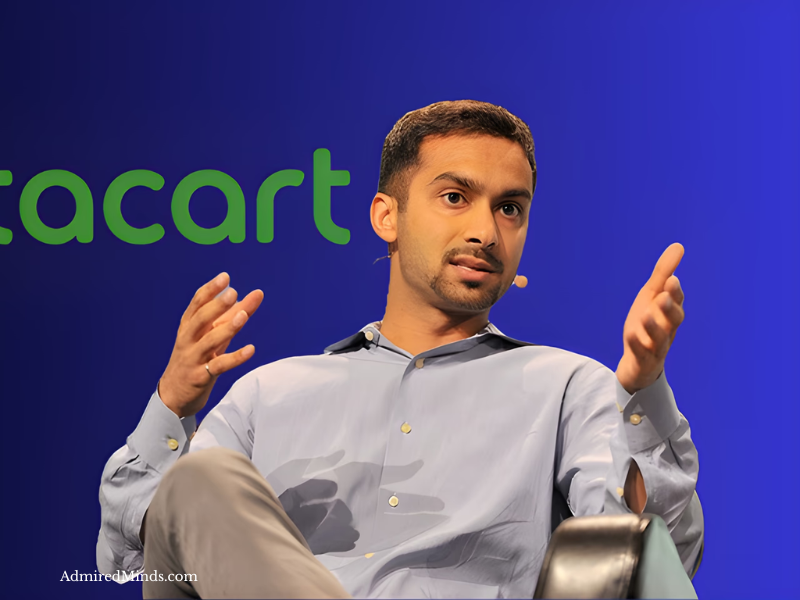
In March 2020, as cities locked down worldwide, most businesses faced existential threats. Apoorva Mehta faced a different crisis:
“We saw five years of growth in a matter of five weeks.”
While other CEOs scrambled to preserve cash flow, Mehta made the counterintuitive decision to accelerate hiring at unprecedented speed, adding 300,000 new shoppers in just weeks while simultaneously implementing entirely new safety protocols and contactless delivery systems.
The decision defied conventional crisis management wisdom, increasing operational complexity and costs during maximum uncertainty. Yet this strategic response transformed Instacart from a convenient service into essential infrastructure, proving that marketplace leaders must think in terms of ecosystem dynamics rather than traditional business metrics during inflection points.
At 39, Mehta has built what he describes as a “four-sided marketplace” connecting customers, retailers, shoppers, and advertisers across 1,800 retailers covering 100,000 grocery stores. His approach to marketplace leadership, balancing rapid scaling with operational excellence during crisis periods, positions him as a strategic thinker who understands how to build resilient platforms that thrive during disruption while serving essential human needs.
Twenty Failures to Billion-Dollar Success: The Systematic Approach to Marketplace Innovation
Mehta’s path to Instacart reveals a methodical approach to identifying market opportunities that others had overlooked. After twenty failed startup attempts and early career experience at Amazon and Blackberry, he developed what he now calls “friction mapping,” systematically identifying everyday processes where technology could eliminate steps without changing fundamental human behaviors.
The insight that led to Instacart emerged from personal frustration: coming home from work too exhausted to grocery shop, yet finding existing solutions inadequate. Rather than accept this inconvenience, Mehta analyzed the entire grocery value chain to identify where technology could create efficiency without disrupting established retail relationships.
“Instacart works by bringing together four parties: customers, retailers, shoppers, and advertisers.”
His strategic breakthrough was recognizing that grocery delivery wasn’t just about logistics‚Äîit was about building a marketplace that could serve multiple stakeholder groups simultaneously. The marketplace design reflected sophisticated strategic thinking about network effects and competitive moats. Instead of competing directly with grocery retailers, Mehta built technology that enhanced their existing operations while creating new revenue streams, enabling rapid partnership acquisition with major chains like Sam’s Club, Costco, Kroger, Safeway, Target, Albertsons, Publix, and CVS.
His early go-to-market strategy demonstrated creative thinking about customer acquisition. When applying to Y Combinator, instead of delivering a traditional pitch, he delivered a six-pack of beer using Instacart to one of the Y Combinator partners. This unique and creative approach instantly got him selected into YC, revealing an understanding that marketplace businesses require experiential demonstration rather than theoretical explanation.
Crisis as Catalyst: Strategic Leadership Through Exponential Demand Shifts
Mehta’s leadership during the 2020 pandemic demonstrates sophisticated crisis management that balances stakeholder needs across complex marketplace dynamics. Rather than treating sudden demand increases as temporary disruption, he recognized the pandemic as a permanent acceleration of consumer behavior changes that required fundamental operational transformation.
His strategic response involved three simultaneous initiatives: massive workforce scaling, comprehensive safety protocol implementation, and technology infrastructure expansion. The workforce scaling wasn’t just numerical‚ÄîInstacart implemented contactless delivery, safety kits, and guidelines for shoppers while maintaining service quality standards across a dramatically expanded shopper network.
“The company faces another ‘crucible moment,’ to amplify the appeal of tech-enabled shopping, even as in-store buying revives.”
The safety protocol implementation revealed strategic thinking about long-term brand positioning. Instead of viewing health measures as temporary costs, Mehta positioned safety investments as permanent competitive advantages that would differentiate Instacart as consumer expectations evolved post-pandemic. His approach to technology scaling during crisis demonstrates sophisticated platform thinking, rebuilding core systems to handle order volume fluctuations while maintaining personalization algorithms and retailer integration performance. This infrastructure investment enabled sustainable growth rather than just crisis survival.

Platform Thinking: Building Sustainable Marketplace Ecosystems
Mehta’s leadership philosophy centers on what he terms “ecosystem optimization,” making decisions that strengthen the entire marketplace rather than maximizing single metrics. His hiring strategy reflects this ecosystem thinking: rather than recruiting solely for technical skills, Mehta prioritizes candidates who understand multi-sided marketplace dynamics.
“You have to think about how every feature change affects four different user types.”
This philosophy extends to partnership strategy with retailers. Instead of viewing grocery chains as vendors to be optimized, Mehta built Instacart’s technology to enhance retailer capabilities and create new revenue opportunities.
“For retailers, we’ve built enterprise software that allows us to bring their inventory online, configure stores for efficient picking, and power their e-commerce experiences.”
His approach to shopper management demonstrates sophisticated understanding of gig economy dynamics, designing systems that optimize for shopper satisfaction and earnings potential. The advertising platform development reveals strategic thinking about sustainable monetization, helping brands reach consumers at optimal moments in the shopping journey while maintaining customer satisfaction.

Beyond Groceries: Strategic Vision for Marketplace Evolution
Mehta’s current strategic focus involves expanding Instacart’s platform capabilities beyond grocery delivery to become comprehensive retail infrastructure. His vision centers on “universal commerce enablement,” providing technology that allows any retailer to participate in the on-demand economy without building separate delivery capabilities.
Looking ahead, Mehta identifies three strategic opportunities shaping marketplace evolution: integration of artificial intelligence into shopper workflows, development of predictive inventory management systems, and creation of embedded commerce solutions for non-traditional retail environments.
For emerging leaders, Mehta emphasizes systems thinking:
“Don’t optimize for growth metrics that compromise long-term ecosystem health. The most successful marketplaces create sustainable value for all participants, not just the platform owner.”
Reflecting on his journey, Mehta adds:
“The key insight was realizing that convenience isn’t just about saving time‚Äîit’s about creating systems that work better for everyone involved. That’s what transforms a good idea into sustainable infrastructure.”
Four Strategic Frameworks for Marketplace Leadership

Friction Mapping Methodology: Systematically analyze complex processes to identify points where technology can eliminate steps without changing fundamental human behaviors. Mehta’s approach focuses on problems that affect multiple stakeholder groups simultaneously.
Ecosystem Optimization Strategy: Make platform decisions based on overall marketplace health rather than single-side metrics. This requires balancing competing interests across customers, suppliers, service providers, and platform sustainability.
Crisis Scaling Framework: During demand disruptions, accelerate capabilities investment rather than simply managing existing resources. Mehta’s pandemic response demonstrates how crisis periods enable competitive differentiation through bold operational expansion.
Stakeholder Balancing Leadership: Develop decision-making processes that explicitly account for impact across all marketplace participants. This creates sustainable competitive advantages by building stronger network effects and participant loyalty over time.










Leave a comment