




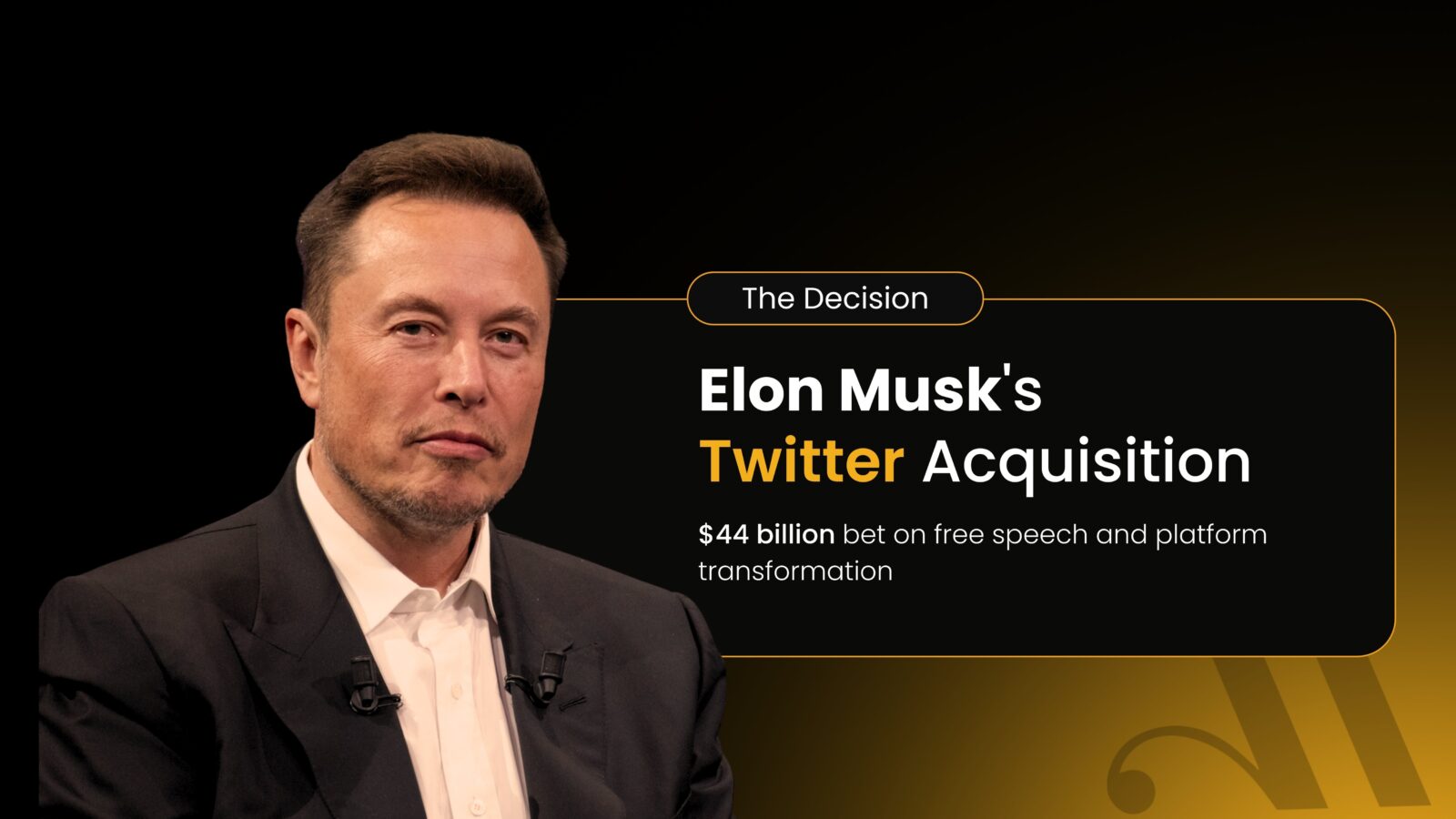
Elon Musk’s $44B Twitter Takeover: A Comprehensive Strategic Analysis
Executive Summary
On October 27, 2022, Elon Musk completed the monumental $44 billion acquisition of Twitter, marking the largest social media platform takeover in history. The acquisition showcased how contrarian strategic thinking applied during market instability can reshape global communication landscapes.
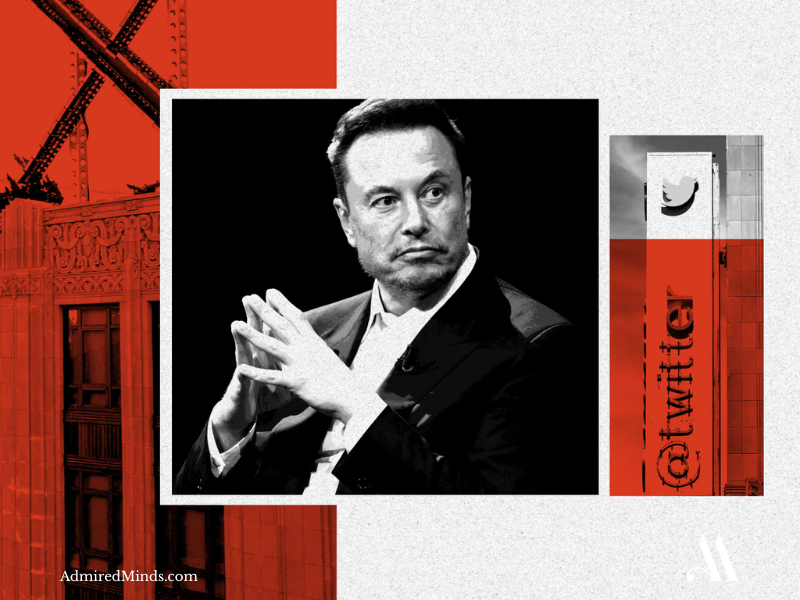
“Great transformations begin when someone dares to challenge the default system.”
Market Context and Financial Impact Assessment
Pre-Acquisition Market Position
Before Musk’s acquisition, Twitter experienced multiple internal and external pressures:
- Declining engagement and stagnant revenue streams
- Valuation near $37 billion in early 2022
- Regulatory disputes & moderation constraints
- Rising competition from TikTok, Instagram & emerging apps
Acquisition Metrics & Investment Breakdown
- Purchase Price: $44B ($54.20/share)
- Premium: 38% above prevailing market price
- Financing: $13B debt + $27.25B equity
- Workforce Reduction: 7,500 ‚Üí 1,500 employees
Strategic Decision Framework Analysis
Key Strategic Opportunity Areas
- Platform Influence Control: shaping global discourse
- Free Speech Market Gap: addressing user dissatisfaction
- Tech Integration Potential: AI, payments, and super-app possibilities
Strategic Options Evaluation Matrix
| Option | Approach | Investment | Risk |
| Passive Investment | Equity stake & board seat | $5-10B | Low control |
| Partnership Approach | Collaborative integration | $15-20B | Shared oversight |
| Full Acquisition | Total ownership | $44B | High risk, high impact |
| Build New Platform | Start from zero | $10-15B | User acquisition difficulty |
Implementation Strategy & Resource Allocation
The Four-Pillar Transformation Model
1. Organizational Efficiency
- Method: Workforce restructuring
- Execution: 75% headcount reduction
- Objective: Faster decision-making
2. Free Speech Policy Revision
- Free speech is the bedrock of democracy.
- Reversal of prior account bans
- Minimized moderation throttling
3. Technological Infrastructure Upgrade
- Focus: Engineering optimization
- Integration: X.ai + AI layers
- Expansion: Payments & financial features
4. Brand Evolution
- Twitter/X
- Positioning as a digital public square
- Long-term super-app ambition
Enhanced Value Creation & Monetization Strategy
Revenue Diversification Channels
- Subscriptions: Twitter Blue scaling
- Advertising: Creator-centric model
- Financial Tools: Crypto + payments infrastructure
- Enterprise Features: Verification & identity systems
Performance Metrics & Outcome Analysis
Short-Term Effects (6-12 Months)
- Engagement: Initial decline ‚ stabilization
- Ad Revenue: 50% fall partially offset by subscriptions
- Innovation: Rapid rollout cycle
- Influence: Cultural & political relevance surge
Long-Term Outlook (3-5 Years)
- Valuation Potential: $100B+ via super-app model
- Industry Impact: Redefining digital standards
- Regulatory Power: Increased geopolitical influence
- AI Integration: High-margin revenue pathways
Return on Investment Analysis
- Acquisition Cost: $44B
- Operational Spend: $10B+
- Projected Valuation: $75-150B
- Estimated ROI: 70-240% within 5-7 years
Conclusion & Strategic Insights
Musk’s acquisition of Twitter marks a radical shift in platform economics and global communication power structures.
He redefined Twitter not as a social network but as a strategic infrastructure with geopolitical, cultural, and technological influence.
This transformation demonstrates that acquiring a platform means acquiring influence, narrative power, and future global reach.
“Platform ownership is the new frontier of global power‚ those who control communication channels shape the direction of societies.”








Leave a comment